
Specification and supply
It is not a matter of taste: spare parts get hard to find and the cost per light point rises every year.
The problem does not arrive as a ban
For several years the European lighting market has moved in one direction: the least efficient sources leave production step by step, and the spares leave with them. For whoever runs a hotel, a restaurant or a public building the problem does not arrive as a ban: it arrives as a supplier who answers "we do not make that tube any more".
It is a difference that matters, because a ban has a date and can be planned for, while a spare part going out of production gives no notice at all: you find out on the day you need it. At that point replacement is no longer a choice about efficiency, it is forced maintenance — and it gets done in a hurry, on the quotation of whoever answers first.
The window in which you choose instead of being forced
Whoever specifies today has a window, and the window has a measurable value. The difference between refurbishing by choice and refurbishing by failure shows in two lines: the cost of the fitting, which is similar either way, and the cost of having a room out of service during trading, which exists in the second case and not in the first.
In hospitality the second line almost always dominates the first. A room out of use, a dining room that cannot be laid, a job running in high season cost more than the fittings being replaced — and they are exactly the kind of cost that appears in no supply quotation.
What to look at in an installation still running fluorescent
Before deciding you need to know what you have. It is not a long survey, and it is what makes the quotations that follow comparable:

- how many light points, of what type, and how many spares are in store
- where the hardest to reach are: those decide the cost of the work
- which spaces can be taken out of service, and in which weeks of the year
- whether the electrical installation takes a change of supply, or has to be touched too
The right question to the supplier is not the price
On a replacement of this kind one question changes the outcome: "will this part still exist in six years?". If the answer is not written down, the answer is no — not out of bad faith, but because nobody commits verbally over that horizon.
There are three forms a written answer can take, and each has to be asked for by name: a declared availability of the spare for a number of years, the supply of stock along with the installation, or the guarantee that the part is an open standard and not proprietary. The third is the most robust, because it does not depend on one supplier surviving.
Replacing is not enough: a wrong installation stays wrong
There is an obvious temptation in a like-for-like replacement: put the new one where the old one was. It works when the installation was right. If instead it was oversized, badly distributed or glaring, the replacement repeats the mistake with new fittings, and locks it in for another ten years.
That is why the lighting calculation comes before the supply, in a refurbishment too. It is not there to choose the product: it is there to know how many points are really needed and where. Often fewer are needed, and then the saving is not only on consumption — it is on the number of fittings bought.
The right moment is chosen on the calendar, not on the price list
In hospitality the dominant cost of any work is not the fitting: it is the room or the hall out of service. It follows that the window is a commercial decision before it is a technical one, and it is taken with whoever runs occupancy, not in the technical office.
The same supply, done off season and by zones, can cost less than half of the same one done as an emergency in July — with identical fittings. It is the only lever in this job that depends solely on how early you start looking at it.

Who pays for it, and on which line
A refurbishment done by choice has one possibility the one done by failure does not: you can decide how to pay for it. Bought outright, it is an investment that ties up capital and gets depreciated; taken on an operating lease, it is a rental that sits among operating costs and does not consume the credit line.
This is not an abstract accounting preference: it changes who can sign. Capital expenditure goes through approvals a rental does not need, and in a hotel group that can be worth months. The question belongs at the start, because once the installation has failed the leasing route often no longer exists: the supplier who answers an emergency sells, it does not finance.
What really changes between one source and another
The reason a replacement is never "the same fitting with a different lamp inside" lies in distribution. A long tube emits along its whole length; a point source does not, and placed inside a body designed for a tube it produces bright patches and dark zones on the same working plane.
It follows that the fitting has to be assessed as a whole, not through the source it contains. Two products with the same declared power and the same flux can give very different results on the same table, and the difference appears on neither data sheet: it appears in the calculation, or on the floor.
There is also a consequence for perception worth flagging to the client in advance: a more efficient light can feel cooler even at the same declared colour temperature, because the distribution of shadow changes. It is an expectation to manage beforehand, not an argument to have afterwards.
The survey: half a day that decides everything else
Surveying an existing installation is not a long job, and it is what makes the quotations that follow comparable. You need to know how many points there are, of what type, at what height, and above all which are hard to reach: those decide the cost of the work, not the price of the fitting.

The second thing the survey produces is a list of spaces with their shutdown windows. A hotel does not switch off all at once: it switches off one zone at a time, and knowing which zone when turns a job into a sequence.
The energy figure is calculated, not estimated
Among the lines compared when deciding a refurbishment, energy is the only one that can be written beforehand and precisely: installed power times hours of operation times tariff. It is not a forecast, it is a multiplication.
The other lines are less certain, but the exercise of putting them in a row changes the decision anyway: maintenance is recurring and uncertain, replacement is one-off and postponable — until it is not. Whoever decides by looking only at the purchase price is optimising the smallest of the four.
Fewer fittings, not just better ones
The result that most often surprises a client is that after the calculation fewer light points are needed than before. Not because the new ones are more powerful, but because the old installation had been designed for a different source, often to criteria thirty years old.
When that happens the saving is not ten years of electricity bills: it is immediate, on the number of fittings bought and the hours of installation. And it is also why the calculation before the supply pays for itself — it is not a formality, it is the line that reduces the order.
The zones nobody looks at, and which come first
In a hotel fluorescent lamps survive longest in three places: kitchen, stores and plant rooms. They are the zones nobody photographs and the staff use every day, and it is there that a source falling off is noticed first — not in the aesthetics, but in the effort of the people working in them.
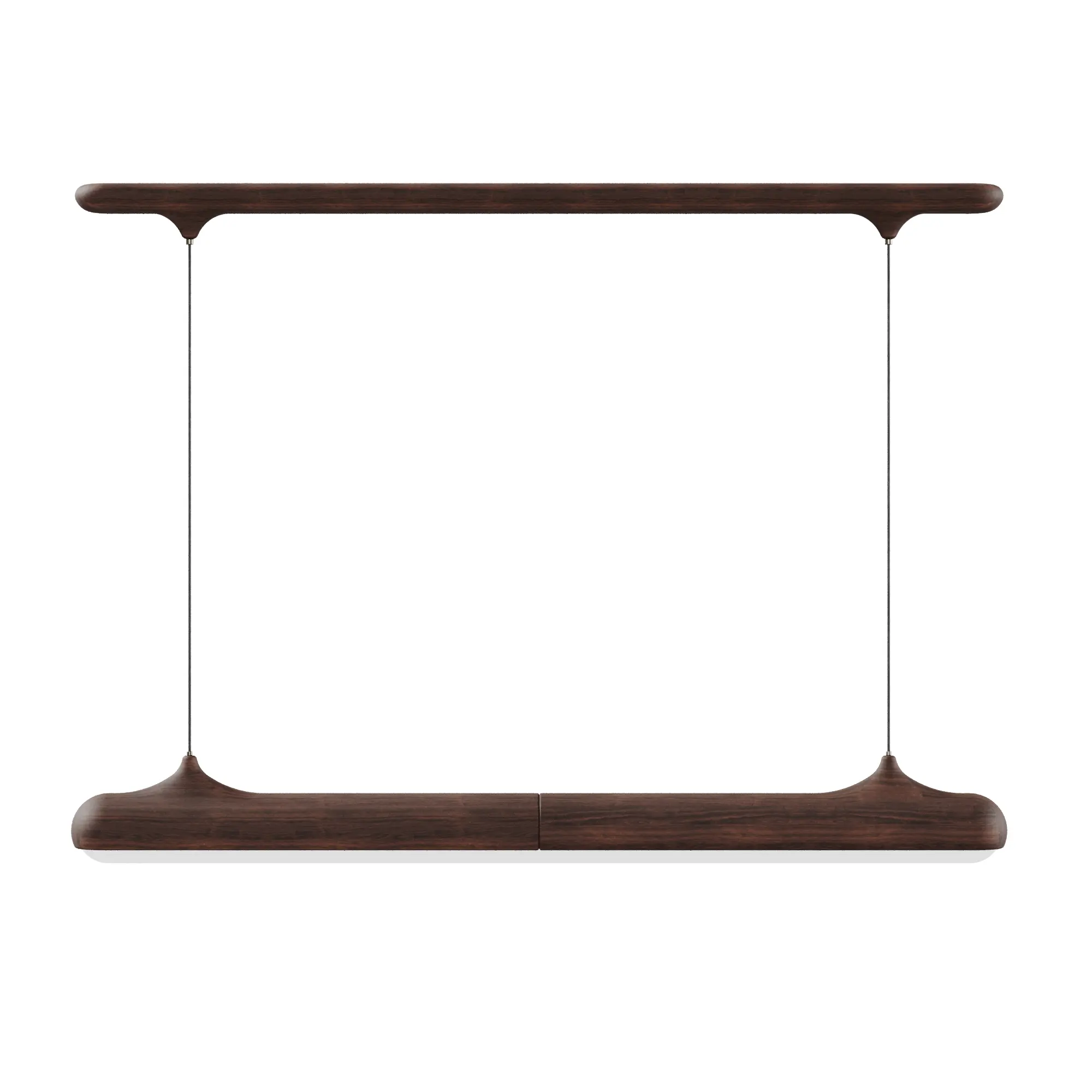
It is worth tackling them first for exactly that reason. They can be shut down without touching the rooms, the return in comfort is immediate for the people inside, and they serve to test the supplier on a part of the building where a mistake does not end up in a review.
Disposal is not a detail, and it belongs to the client
A fluorescent tube contains mercury, and for that reason it is not ordinary waste: it is special waste, with its own chain and its own paperwork. On a replacement of a few pieces it passes unnoticed; on a whole hotel it becomes a line with a cost, a carrier and documents.
The thing worth clarifying in the quotation is simple and almost nobody clarifies it: who takes the old ones away. Some supplies include it, others do not, and in a quotation the difference only shows if you look for it. Finding out at the end of the job means ending up with skips full of tubes in a store and nobody appointed to remove them.
How it is written into the specification
For quotations to be comparable, the specification has to say five things. None of them is about the product:
- The performance required per space, not the model
- the written commitment on spare availability, and for how many years
- how much stock is included in the supply, and where it stays
- The site window, by zone and by week
- who produces the lighting calculation and who answers for it
| Refurbishing by choice | Refurbishing by failure | |
|---|---|---|
| When it is decided | while there is time | when the room is dark |
| Who sets the price | three comparable quotations | whoever answers first |
| Room out of service | off season, by zones | now, in service |
| Lighting calculation | before the supply | there is no time |
| Number of fittings | often fewer than before | the same as before |
| How it is paid for | purchase or rental | purchase, in a hurry |
The spare, not the lamp
The right question to the supplier is not "what does it cost", it is "will this part still exist in six years". If the answer is not written down, the answer is no.
Consumption is not the only saving
A replacement made on a badly designed installation repeats the mistake with new fittings: the lighting calculation comes before the supply, even when you are only replacing.
The right moment is off season
In hospitality the dominant cost is not the fitting, it is the room or the hall out of service. The window is chosen on the calendar, not on the price list.
Do you know how many light points you have, and where the hard ones are?
Send us the plans and the list of what is there: back comes the lighting calculation and the list of what is really needed, before there is a quotation in the way.
Ask for the lighting calculationA bespoke pieceThe properties we have lit