
Materials and finishes
Project images have become so good that a sample looks like an avoidable cost. Then installation arrives, and the fabric argues with the light.
The render shows shape, not reaction
A project image tells proportions, bulk and the relation to the room very well. It tells one thing badly, and it is exactly the thing the client will pronounce on: how that material behaves under that light.
The reason is technical before it is aesthetic. A render works on a model of the material, not on the material; and the models are excellent with simple surfaces and approximate with the ones that diffuse, such as fabrics, open-grained woods and brushed brass.
The moment the discussion shifts
The scene repeats with surprising regularity. Installation arrives, the fittings are switched on, and the pleated shade that was ivory in the render turns towards yellow under a 2700 K source.
At that point the client does not discuss colour temperature, which they do not know and should not have to: they discuss the fabric. And the conversation is no longer about a design, it is about something already delivered, which is the worst position for anybody.
What a mock-up room actually is
It is not a furnished show bedroom, and it does not need to be. A useful mock-up can be a corner of the site with the finished wall, the real fabric, one fitting mounted at the right height and the project source.
What matters is that all four things are true at the same time. A beautiful sample hanging in an office under office light proves nothing, and gives a confidence that gets paid for later.
Where it is needed, and where it is not
A sample is not needed on everything: it costs, and used everywhere it becomes a ritual. It is needed where material and light genuinely influence each other, and that boundary is found with one simple question — does the surface diffuse or reflect?

- pleated fabrics, silks and linens, where the weave filters and colours
- open-grained woods, which absorb differently from the polished sample
- brushed brass and bronze, where the direction of brushing shows
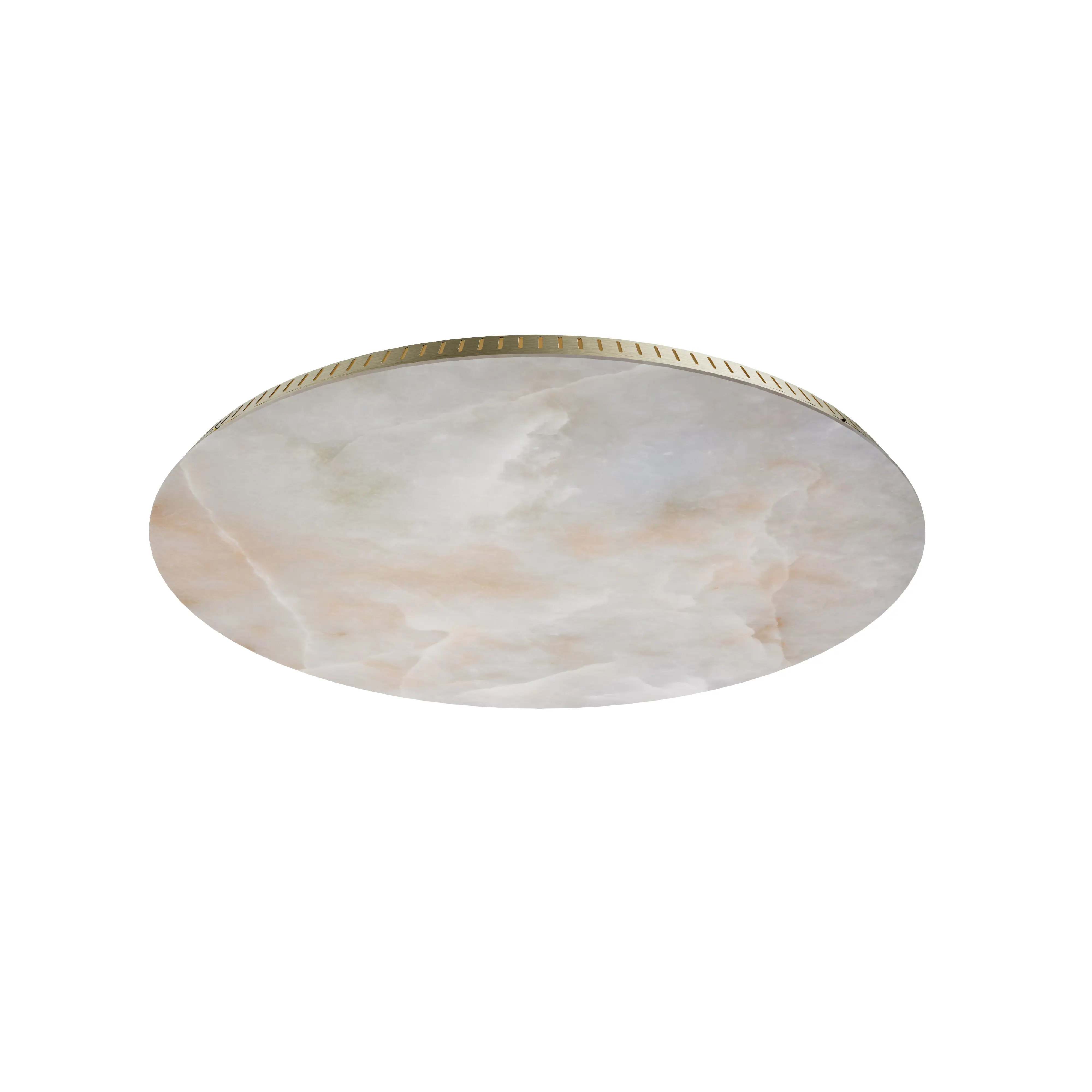
- backlit marble and onyx, which change entirely with the source behind
The material, not the fitting
A sample is there to judge the finish under real light, not to verify that the lamp exists. It is a distinction that sounds pedantic and changes everything: if the purpose is the material, one piece is enough, and it need not be the final piece.
Many supplies stall because everyone waits for the complete prototype when a finish plate and a source would have done. Asking for less, and asking earlier, is nearly always the faster route.
The final source, or it does not count
A sample lit with a source different from the project one proves nothing. That is not a detail: between two nominally identical sources the spectrum differs, and the spectrum is exactly what decides how a fabric returns colour.
If the final source is not available yet, it is better to postpone the test than to run it with a stand-in. A badly run test closes the discussion the wrong way, and reopening it later costs more than waiting would have.
Whoever looks decides, and has to be there
A mock-up is judged with the client present. It sounds obvious and it almost never happens: the sample gets photographed and the photograph gets sent, which is an image again, and reopens exactly the discussion the sample was meant to close.
That half hour is worth defending. A decision taken in front of the piece is a decision that holds, because whoever took it saw the same thing the guest will see.
The hour of the day changes the verdict
A mock-up looked at midday with the windows open says little about a lobby that will be judged in the evening. Daylight dominates and flattens the fitting's contribution, and the sample always looks more neutral than it will be.
The rule is simple: look at it under the conditions in which the room will actually work. If it is an evening restaurant, look in the evening; if it is a lobby that lives by day, look by day too, and those are two different tests.

What to look at, in order
In front of a sample the eye goes where it likes, and it usually goes to the shape. An order is worth having, because the four things that matter are not the ones that catch the eye first.
- the colour of the material lit, compared with the same material unlit
- the weave: if light passes through it, where the fabric structure shows
- the shadow the fitting throws on the nearby wall or ceiling
- the point of view of somebody seated, which almost nobody tries
The cost, put in the right order
A sample costs one single supply. A replacement after handover costs the supply, plus the site work, plus the room out of service, plus the time of whoever has to re-explain the choice to whoever pays.
Put that way it is not a choice between spending and not spending: it is a choice between spending a little now and possibly a lot later. The hard part is that the first cost appears in a quotation and the second does not.
When a sample genuinely saves money
There is one case where a sample pays for itself immediately, and it is when the choice lies between two materials of very different price. Seeing that the cheaper one holds up under that light closes the discussion and frees budget for the rest.
It happens more often than people think. The difference between two finishes is frequently invisible once they are lit, and nobody finds out until they are placed side by side under the right source.
The sample is also a document
Once approved, the sample becomes the reference against which the supply is checked. It has to be kept, labelled and cited in the order document, otherwise in six months nobody will be able to say whether the delivered batch matches.
It is the part that costs least and is forgotten first. A label with the date, the finish and the source used turns an object into evidence.
If the piece does not exist yet
On a bespoke fitting the sample is not an exception to be negotiated: it is the normal way of working, because shape, material, finish and source are settled in production and not picked from a catalogue.
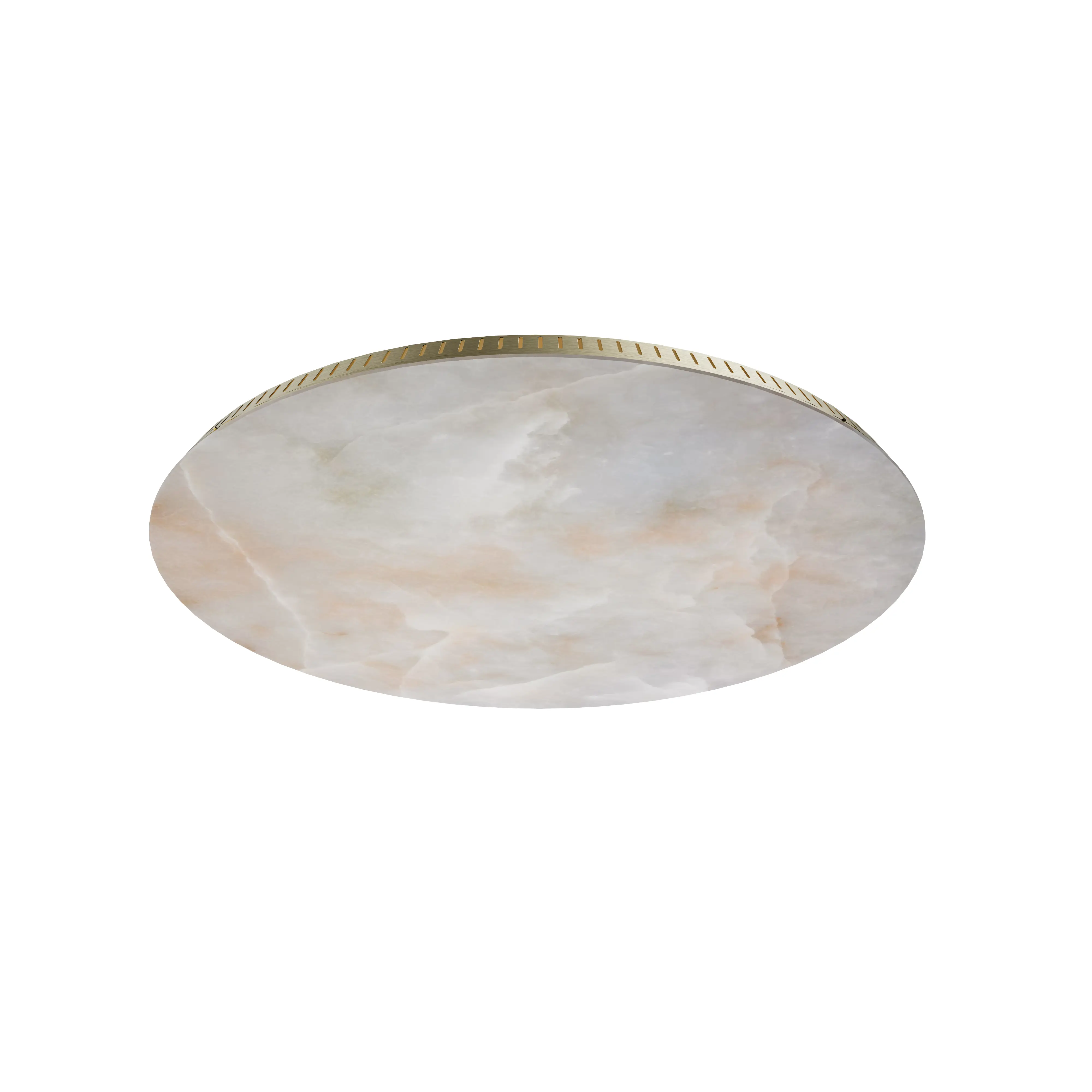
The practical advantage is that changing your mind costs almost nothing. A finish is remade on a plate before the piece exists; afterwards, it is remade on the piece.
The tests, and what getting them wrong costs
Lined up, the tests that can be run before the supply do not carry the same weight or the same cost. Some take an afternoon, others take weeks, and one — running none at all — is paid for after handover.
What changes for the designer
For a designer the sample moves the discussion from taste to observation. A choice is no longer defended with words: an object is shown lit, and the conversation lasts five minutes instead of three meetings.
It is also a protection. A choice approved in front of the piece does not come back, and variation requests arriving later have a reference to measure themselves against.
The sample nobody asks for: the source alone
Before the material even, it is worth seeing the source alone, lit against the finished wall. It costs almost nothing, it takes an afternoon, and it shows the thing that will condition everything else: how warm that light is, how directional, and what shadow it makes.
It is also the best moment to notice that the temperature chosen on paper does not hold in that room. Changing it then is one line on an order; changing it later means remaking every fitting that used it.
Two samples side by side beat one
A single sample is judged badly: the eye adapts and within half a minute everything looks normal. Two samples next to each other, under the same light, say in an instant what a single one does not say in ten minutes of discussion.
They need not be very different. Even two variants of the same finish, side by side, make visible a difference nobody would have noticed alone — and it is exactly the difference that will be noticed in a row on the ceiling.
When the mock-up becomes an alibi
There is a wrong use of the sample, and it is when it serves to postpone a decision rather than to take one. It is mounted, looked at, declared in need of review, and the same scene repeats three times while the site programme runs on.
The remedy is to write down beforehand what the test has to decide and who decides it. A test without a precise question produces opinions instead of answers, and opinions are endless while site weeks are not.
The sample travels, and travelling changes it
A practical detail that ruins more tests than anyone expects: the sample arrives on site in a box, and often stays there until somebody has time. A fabric folded for two weeks shows the creases, brass handled with bare hands shows the fingerprints, and the test starts at a disadvantage.
It is worth asking for it to arrive packed flat and to be opened only in front of whoever has to decide. It is a trivial request, it costs nothing, and it removes half the arguments that start over a flaw the final piece would never have had.
The three lines to put in the order
If only one thing survives from all this, let it be three lines to write into the order document before the supply. They are short, and they remove most of the arguments that otherwise start later.
- which sample, in which finish and with which source
- who approves it, and under which lighting conditions they look
- where it is kept after approval, and for how long
| The test | What it takes | What it proves |
|---|---|---|
| Project render | an afternoon | proportions and bulk |
| Finish plate | a few days | the colour of the material lit |
| One fitting mounted | one or two weeks | weave, shadow and result on site |
| Full mock-up room | several weeks | the room as it will be |
| No test at all | nothing, at the start | found out after handover |
The model is not the material
A render works on a simulation of the surface. On fabrics and open-grained woods the simulation is approximate, and that is where the argument begins.
One piece is enough, if it is the right one
The full prototype is not needed: the real finish, the project source and the mounting height are. The rest can wait.
Looking together settles it
A photograph of the mock-up is an image again. The decision only holds if whoever decides has seen the piece lit with their own eyes.
If the piece does not exist yet, we make it
Shape, material, finish and source are settled in production. A single sample before the full supply is not an exception: it is how we work.
How bespoke worksThe workshop, close upThe buildings we have lit