
TECHNICAL SPECIFICATION GUIDELINES FOR LIGHTING IN CONTRACT PROJECTS
A practical guide for architects and interior designers on defining lighting performance metrics, ingress protection, and procurement protocols in FF&E contract documentation.
The problem: how it manifests on the construction site
In complex hospitality and luxury contract projects, ambiguous technical documentation creates immediate operational bottlenecks during the final fitting phase. When lighting specifications rely solely on generic descriptions, generic aesthetics, or loose power figures, contractors frequently source alternative products that do not match the intended architectural design or performance criteria.
The impact on site becomes evident during installation: colour temperatures vary across adjacent rooms, decorative fixtures produce unexpected glare, and housing drivers fail to fit into prepared ceiling recesses. Resolving these discrepancies on site leads to extended project delays, disputed variation costs, and compromised interior environments for the ultimate project client.
The metrics that matter, and what they really indicate
Evaluating a technical luminaire requires looking beyond simple operational wattage. Total luminous flux, expressed in lumens, combined with real system efficacy determines whether a luminaire delivers adequate illuminance while adhering to modern building energy budgets. Focusing strictly on power intake without verifying optical output often results in under-lit spaces or excessive heat generation within enclosed joinery.
Equally vital for high-end hospitality interiors are colour metrics and mechanical protection standards. Color Rendering Index and Color Fidelity scores ensure that materials, textiles, and architectural surfaces maintain their natural depth and tone under artificial light. Ingress Protection rating dictates the fixture structural resistance to solid particles and moisture, directly dictating safe installation zones in humid or public areas.
| What | Value | When |
|---|---|---|
| System Luminous Efficacy | Minimum 90 lm/W delivered output | To be enforced across all primary functional and task lighting fixtures. |
| Color Consistency (MacAdam Ellipse) | SDCM Step 3 or lower | Mandatory for all adjacent LED sources in public corridors and guest rooms. |
| Ingress Protection (IP Rating) | IP44 minimum for bathrooms; IP65 for wet and exterior zones | Required when specifying fixtures for high-humidity or outdoor contract areas. |
| Impact Resistance (IK Rating) | IK08 minimum | Essential for ground-recessed and low-level luminaires in public circulation paths. |
The thresholds: power and flux, IP and IK, delivery lead times
A robust technical specification establishes precise physical and mechanical thresholds rather than wide estimation ranges. Defining minimum lumen output alongside maximum allowable system wattage prevents suppliers from substituting high-consumption, low-output alternatives. Specifying precise operational parameters ensures that the visual design intent aligns perfectly with the actual electrical infrastructure installed on site.
Mechanical impact resistance rating and humidity protection thresholds must correspond directly to the intended room usage. High-traffic hospitality corridors, exterior facades, and wellness zones demand verifiable protection levels to guarantee longevity. Establishing clear lead-time protocols for mock-up samples and final manufacturing batches ensures the procurement schedule aligns with main construction milestones.

How to write it into the specification document
To enforce compliance, each luminaire schedule entry must combine physical design criteria with explicit performance targets. Specifications should explicitly list the required optical beam angles, driver protocol compatibility, color consistency thresholds, and required mechanical protection ratings. Ambiguous terms such as or equivalent must be replaced with strict performance-matching requirements.
Furthermore, the specification must outline mandatory compliance documents and pre-production submission requirements. Mandating physical mock-ups, submittal drawings, photometric files, and factory testing reports prior to batch manufacturing creates a clear contractual baseline. This structured methodology protects the design intent and holds manufacturers accountable throughout the entire supply chain.
Errors that cost you later
The most frequent error in contract lighting specification is failing to define driver location, dimming protocols, and thermal management constraints. Specifying a luminaire without confirming whether its driver is integral, remote, or subject to specific distance limitations often results in unhoused electrical components during site installation.
Another costly mistake is omitting physical sampling protocols before releasing full production orders. Without inspecting a physical sample under real site conditions, designers risk accepting fixtures with poor finish quality, mismatched colour temperatures, or complex mounting mechanisms that significantly inflate installation labour costs during the final fit-out phase.
What to ask the manufacturer
Before finalizing product selection, designers must engage manufacturers with precise technical questions regarding component traceability and system integration. Requesting full photometric data, thermal testing records, and verified driver compatibility lists ensures that the luminaire will perform reliably within the specified architectural environment.
It is equally necessary to clarify custom production capabilities and physical sampling procedures. Establishing clear communication regarding lead times, custom finish approvals, and spare parts availability guarantees that the procurement process runs smoothly without compromising project deadlines or overall design integrity.
What to ask the supplier
- What is the exact MacAdam ellipse step rating for the proposed LED modules across the entire supply batch?
- Are complete LM-79 and LM-80 photometric test reports available for the specified optical configuration?
- Which dimming protocols are natively supported, and has driver compatibility been verified with the specified control system?
- What are the precise thermal and clearance requirements for remote driver housing within ceiling voids or joinery?
- What is the formal submission and approval protocol for physical production samples prior to full manufacture?
The document people actually read is two pages
A lighting specification often runs to thirty pages, and the parts that govern a supply are almost never more than two: the schedule of fittings and the clauses that bound substitution. Everything else is context, and context is skimmed.

This is not a criticism of long documents; it is an observation about how they are used on a building site. The person deciding what to order has a deadline, and reads the table.
So the table has to carry the requirements, not point at them. A schedule column that says «see clause 4.7» has already lost, because clause 4.7 lives in a file somebody else has open.
«Or equal approved» needs a bound, or it means nothing
Every specification allows equivalents, and it has to: refusing them makes a document unbuildable. But an equivalent is only meaningful against a list of properties that must match, and that list is what most specifications omit.
Without it, «equal» is decided by whoever is buying, and their criteria are price and availability, which is exactly the outcome the document existed to prevent. With it, the conversation becomes factual: this one matches on four of five, and here is the fifth.
Four or five properties per fitting are enough — output, colour and rendering, glare behaviour, and physical dimensions. Anything more becomes a specification of one product and stops being a specification at all.
Who writes it and who signs it are rarely the same person
In most projects the lighting requirements are drafted by a designer and issued under the name of an architect or a contract administrator. That is normal, and it creates a gap: the person who understands why a threshold is there is not the person who will defend it when it is challenged.
The challenge always comes, usually as a value engineering exercise late in the programme, and it is answered with whatever justification is written down. If the reason lives only in the designer's head, the threshold goes.
Two lines per requirement close that gap: what the value protects, and what happens if it is not met. It reads as redundant while the document is being written and it is the only thing that survives the meeting where the budget is cut.
The schedule is the specification; the prose is commentary
The most common structural error is a document where the narrative sections carry the requirements and the schedule carries only product references. Read that way, changing a fitting silently changes the requirement, because the two are not linked.
The arrangement that holds does the opposite: each row of the schedule states the performance for that space, and the product reference is an example of something that meets it. Substitution then has a target to hit.
It also makes the document survive its own revisions. A schedule row can be updated without rewriting prose, and a project that runs for two years will revise the schedule many times.
Certificates: what has to be produced, and when
Documentation requirements are usually written as a list of certificates and left undated, which means they arrive at handover in a folder nobody opens. By then they cannot influence anything, and their only function is archival.
The useful version attaches each document to a moment: photometric files with the offer, so they can be compared; test certificates before manufacture, so a non-compliance is found while it is cheap; and the operation and maintenance information at handover, where it belongs.
Stated that way, the same list stops being paperwork and becomes a sequence of checks. It costs nothing extra and it changes what the documents are for.
The clause that saves the most money is about samples
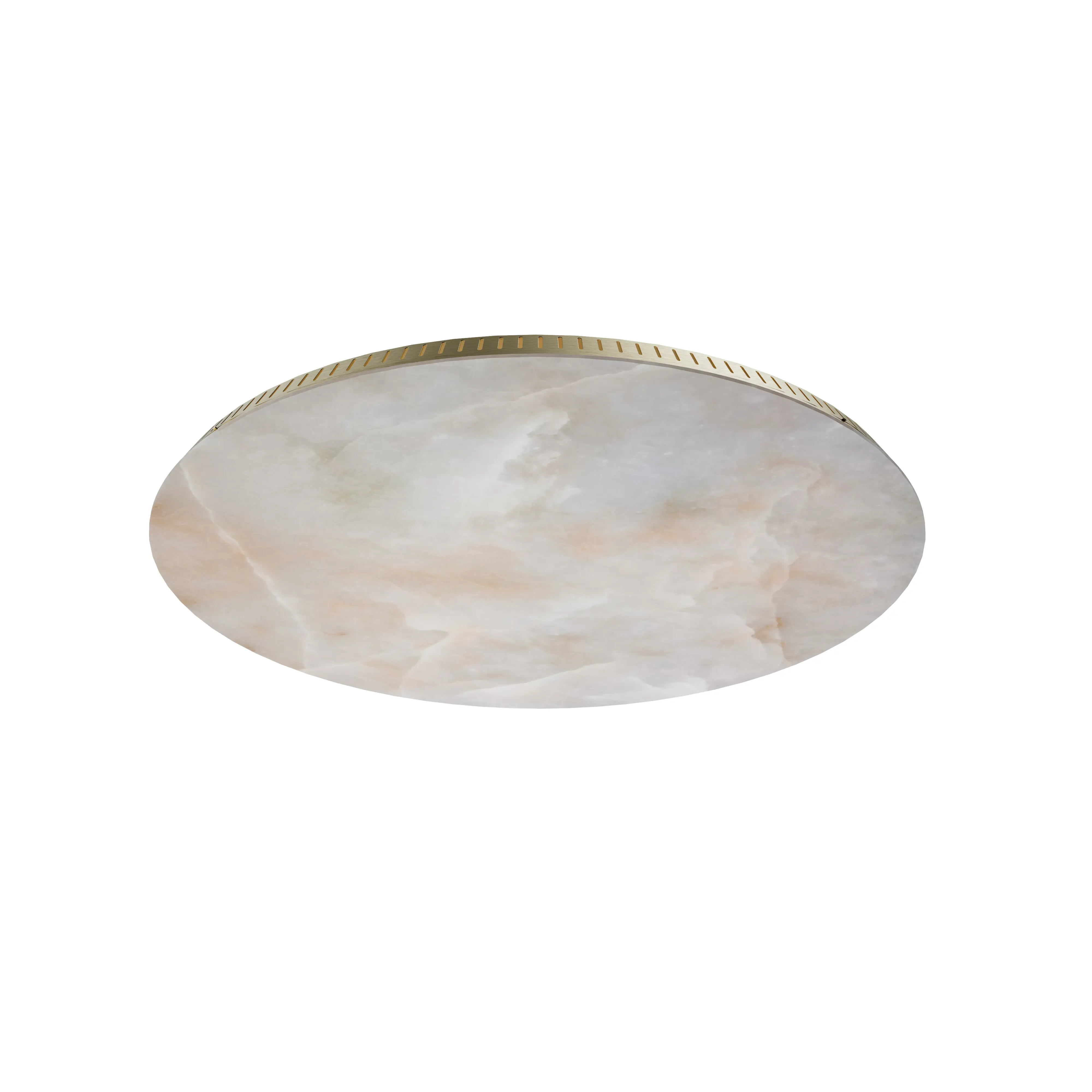
Of everything a specification can contain, the provision that most reliably prevents cost is the one requiring a physical sample of each decorative type, under the project source, before the main order is released.
It works because it moves the discovery of a mismatch from after delivery to before manufacture, and the difference between those two moments is the entire cost of the supply. Nothing else in the document changes the economics that much.
It is also the clause most often struck out for programme reasons, on the grounds that there is no time. That is usually true and rarely relevant: the weeks saved by skipping it are the same weeks spent replacing what arrives.
Emergency lighting is a different document, and it must say so
Escape lighting is governed by rules that have nothing to do with appearance, and it is almost always designed by a different discipline on a different drawing. Where the two documents overlap without acknowledging each other, the result on site is a decorative ceiling interrupted by devices nobody expected.
The overlap is predictable and can be settled early: which fittings carry an emergency function, whether the escape route is served by dedicated units or by converted decorative pieces, and who owns the test regime afterwards.
Written into the lighting specification as a cross-reference rather than as content, it costs three lines. Left out, it becomes a variation at the worst moment — when the ceiling is finished and the certificate is due.
In short
- Drafting detailed technical parameters prevents unauthorized product substitutions and site delays.
- Establishing clear thresholds for flux, IP ratings, and colour consistency protects long-term project quality.
- Verifying driver placement and control protocol compatibility avoids costly electrical revisions on site.
- Enforcing physical sample approvals ensures finish quality and light performance before mass production.
A project under way?
Upload the specification or configure the rooms: the bill of quantities comes back with fittings and quantities, ready for your next meeting.
Open the advisor