Completed project
GF200: from the hand drawing to the room, step by step
A chandelier drawn, built and tested for one room only. The light is ours: and here you also see how, because the drawing, the bare structure and the workshop test are as much part of the work as the result.
Project data

It starts on a sheet of paper, with a code in red
The project begins by hand: the sections, the curves of the rods, the dimensions, and in one corner the code — GF200 — which from then on follows the piece through the workshop, the delivery note and the site.
This is not nostalgia for pencil: it is the fastest way to show a client how far it will actually drop before anybody cuts a tube.
Under the rods there is a machine, and it is drawn first
The bare structure on the bench is the part nobody will ever see: radial arms, lamp holders, the cable runs. On it depend the spacing of the sources and the weight the chain will carry.
It is also the part that decides whether the piece can be maintained: changing a lamp on a fitting three metres up is a problem solved at the bench, not afterwards.

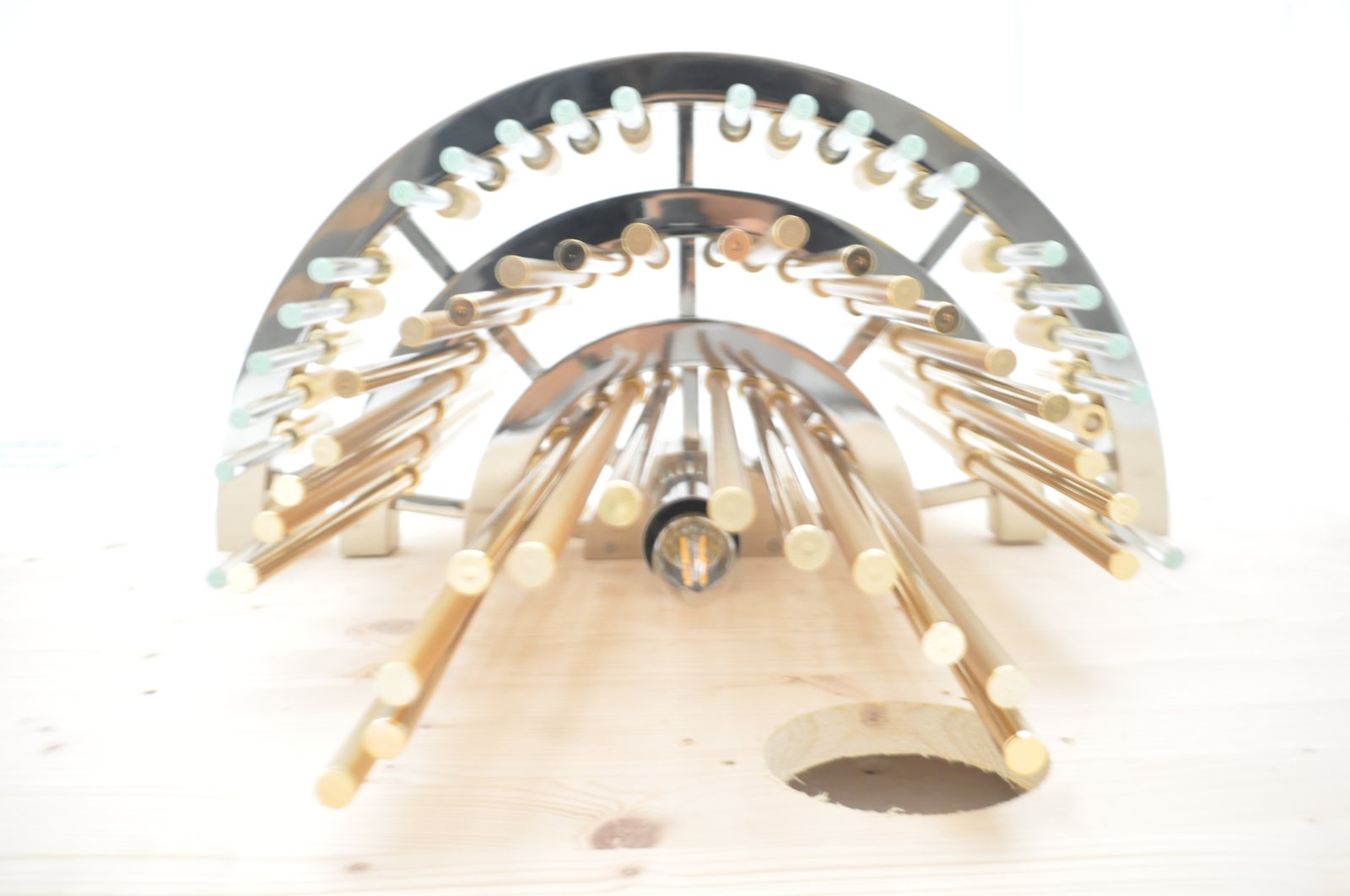
Then it is hung, and looked at
Before shipping, the piece is suspended on its own chain in the workshop and looked at from near and far. A chandelier lying on a bench lies: the rods do not hang as they will hang, and the shadows are not there.
It is the step that gets cut when you are late, and it is the step that stops you discovering in the client’s house that two rings touch when the piece turns.
Four steps, from the test panel to the view from the table
The test, the hanging, the finished piece and what whoever sits beneath it sees.
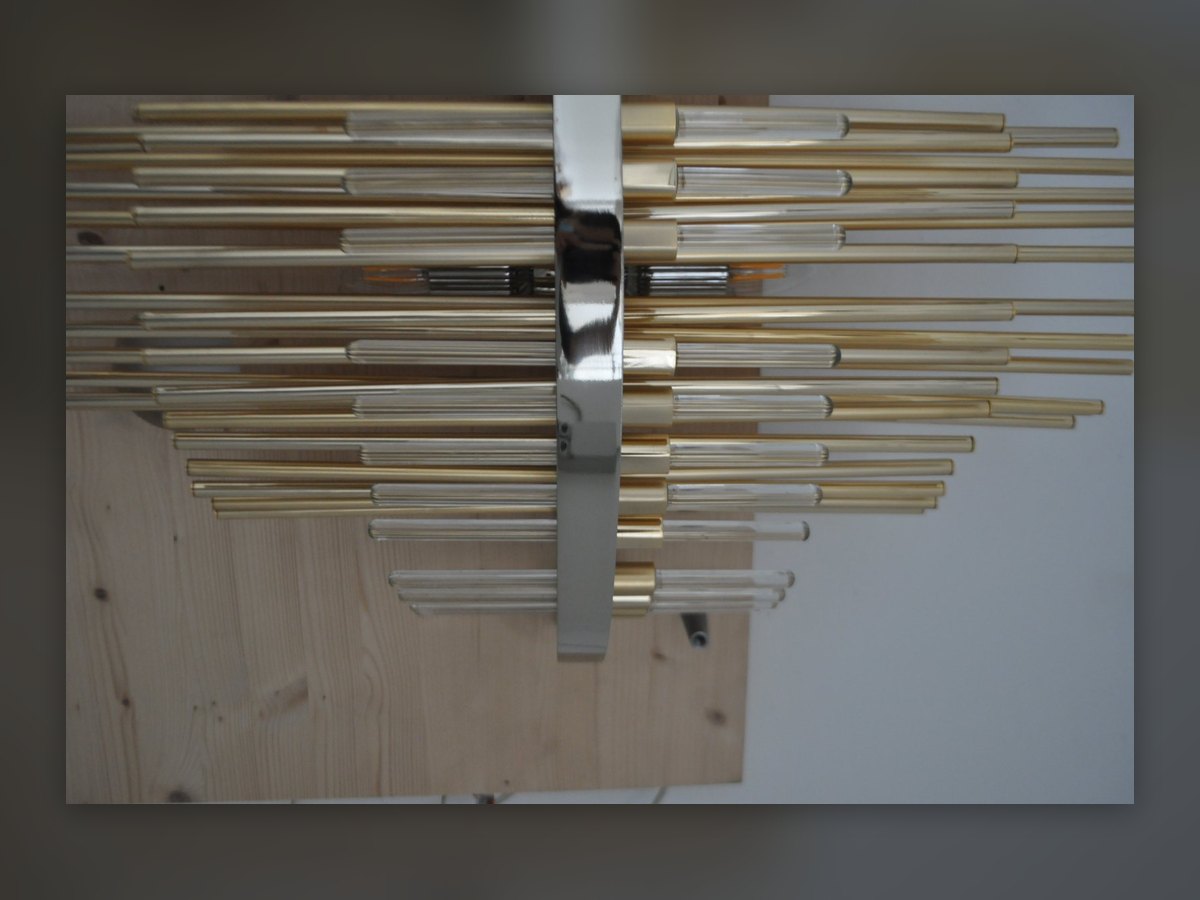
A test panel before the real piece
The rods are mounted on a board so they can be looked at still: how far they project, how they take the light, whether the bracket shows. A fault found here costs an hour; found on the assembled piece it costs a week.
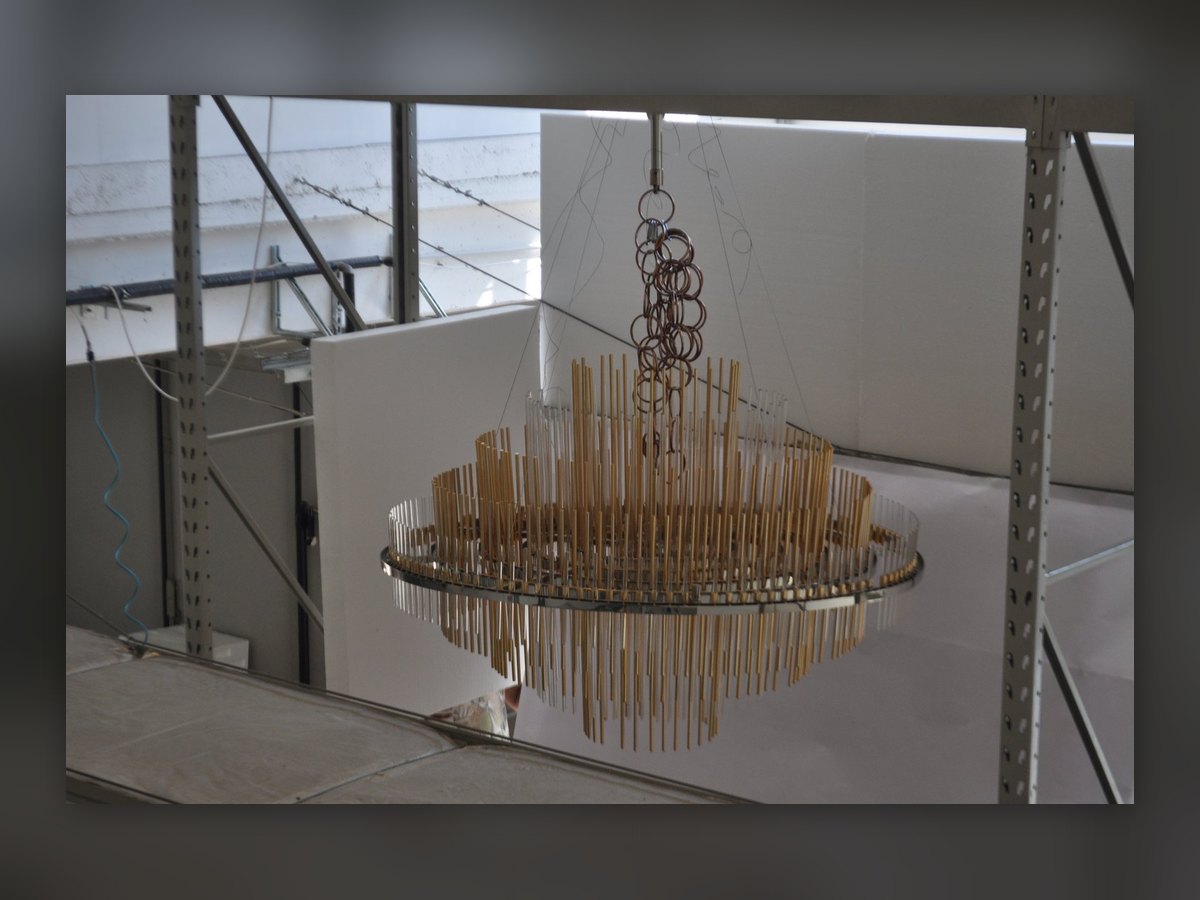
It is hung in the workshop, and looked at from below
Before it ships the chandelier is hung on its own chain and looked at from every distance. It is the only way to know how it will really behave: lying on a bench, it lies.
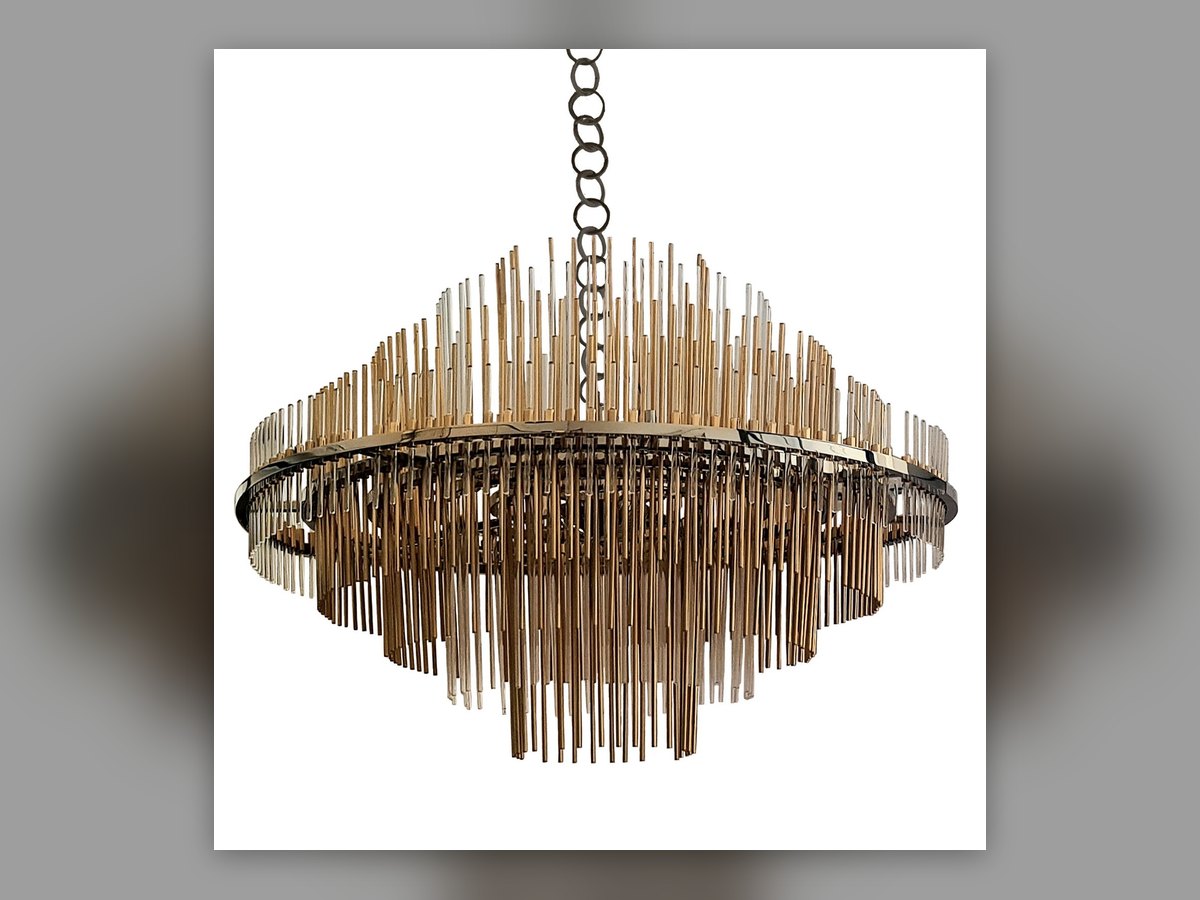
The finished piece, with no room around it
Out of context you see what the design decided: how many rings, how far they step, where the metal ends and the light begins.
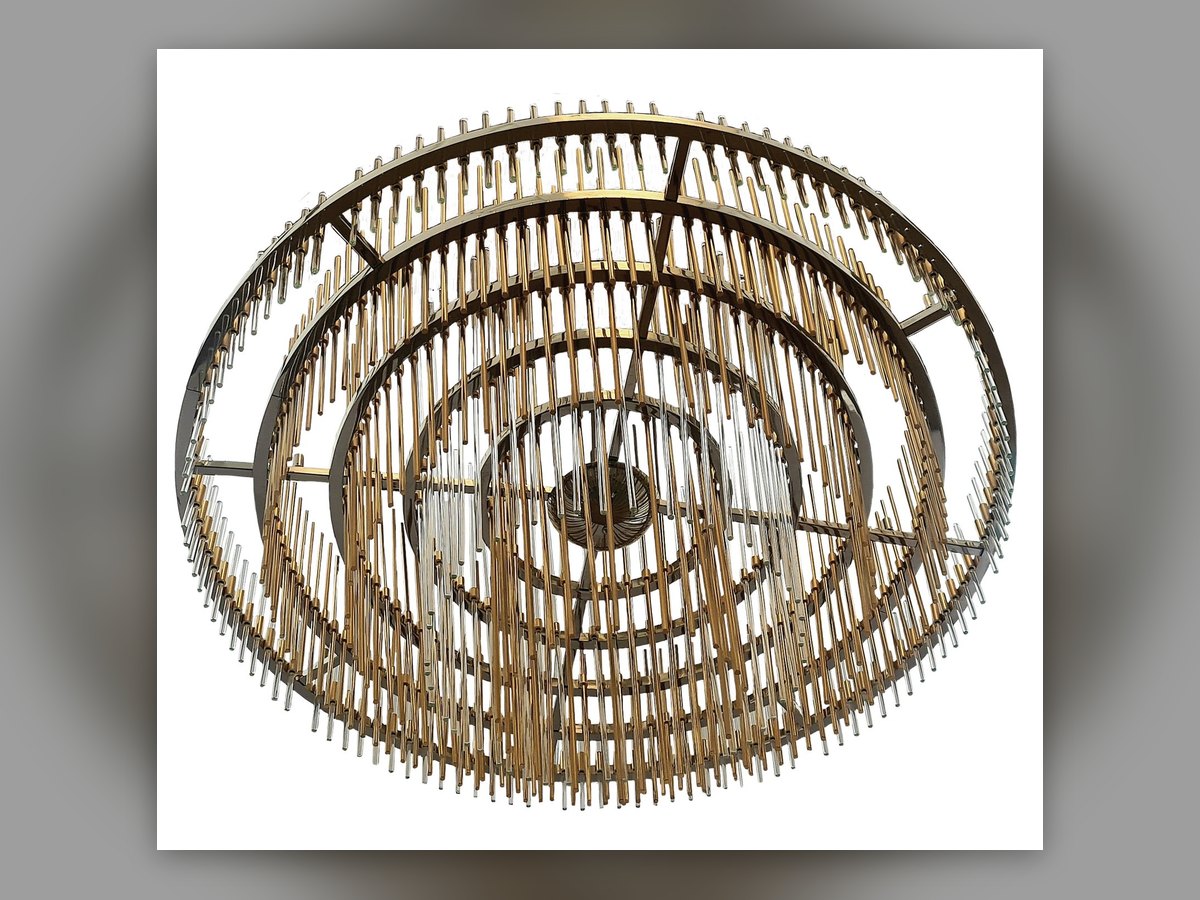
From below it is a concentric target
This is the view of whoever sits at the table. The rings tighten towards the centre and the rods step down: from there the piece does not read as a hanging object, but as a drawing on the ceiling.
A one-off is designed first and tested twice
Send us the room, the height and what happens underneath: we come back with a drawing, and then with the piece hung up to look at.