Completed project
Grand Hotel Visconti Palace: blown glass that works, every single day
Chandeliers, wall lights and ceiling fittings in blown glass of the Venetian tradition, from the banqueting room to the guest rooms. The light is ours: not showcase pieces, but the working installation of a hotel that opens every morning.
Project data
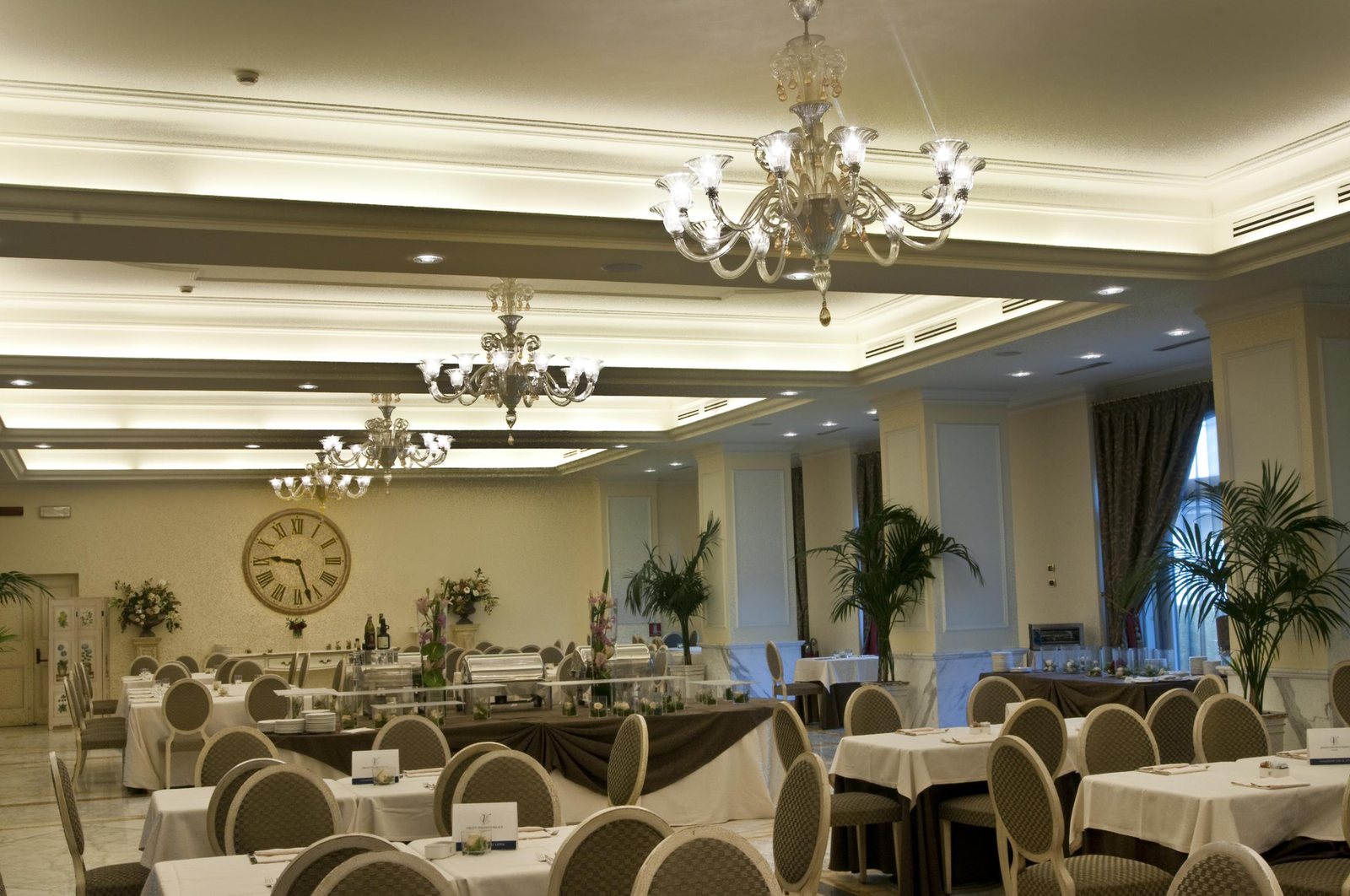
Blown glass is not decoration here: it is the installation
In the banqueting room the chandeliers are not also the light: they are the light. Below them tables are laid, served and cleared every day, and what hangs from that ceiling has to take canteen use without looking like it.
That changes the whole design: the suspension height is decided by the waiters, not by the drawing. An arm hung too low over a round table is a broken piece within the first month.
Two registers of the same glass, and they know when to keep quiet
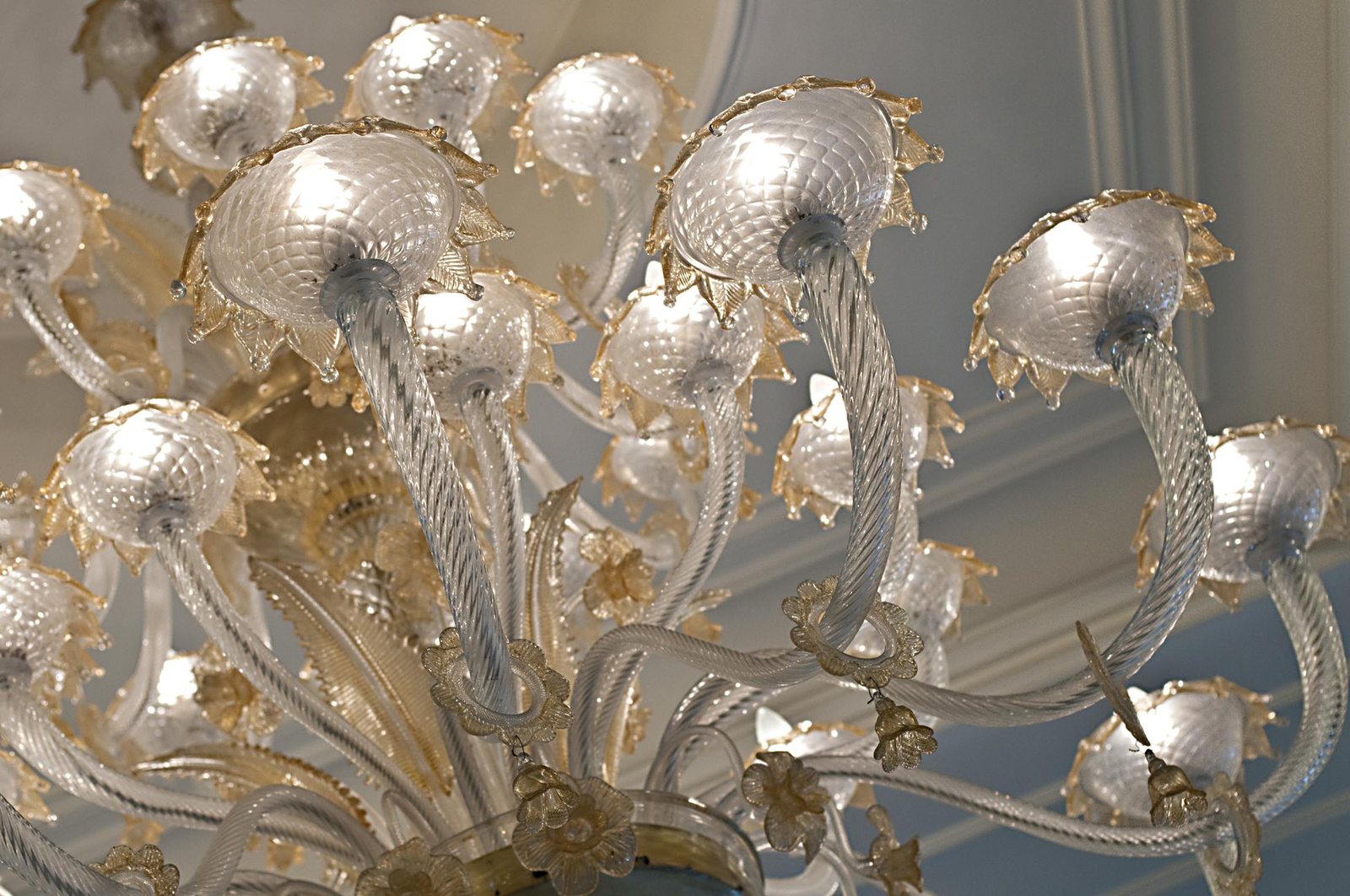
The figured register — twisted arms, ribbed cups, gilded rims — goes where the room is tall and empty: the hall and the lobby. The quiet register — plain opal, ribbed cylinders — goes where the wall already speaks for itself, on damask and along corridors.
It is the same hand and the same craft, measured out: a classic hotel is not furnished by repeating its finest piece, it is furnished by knowing where that piece would become noise.
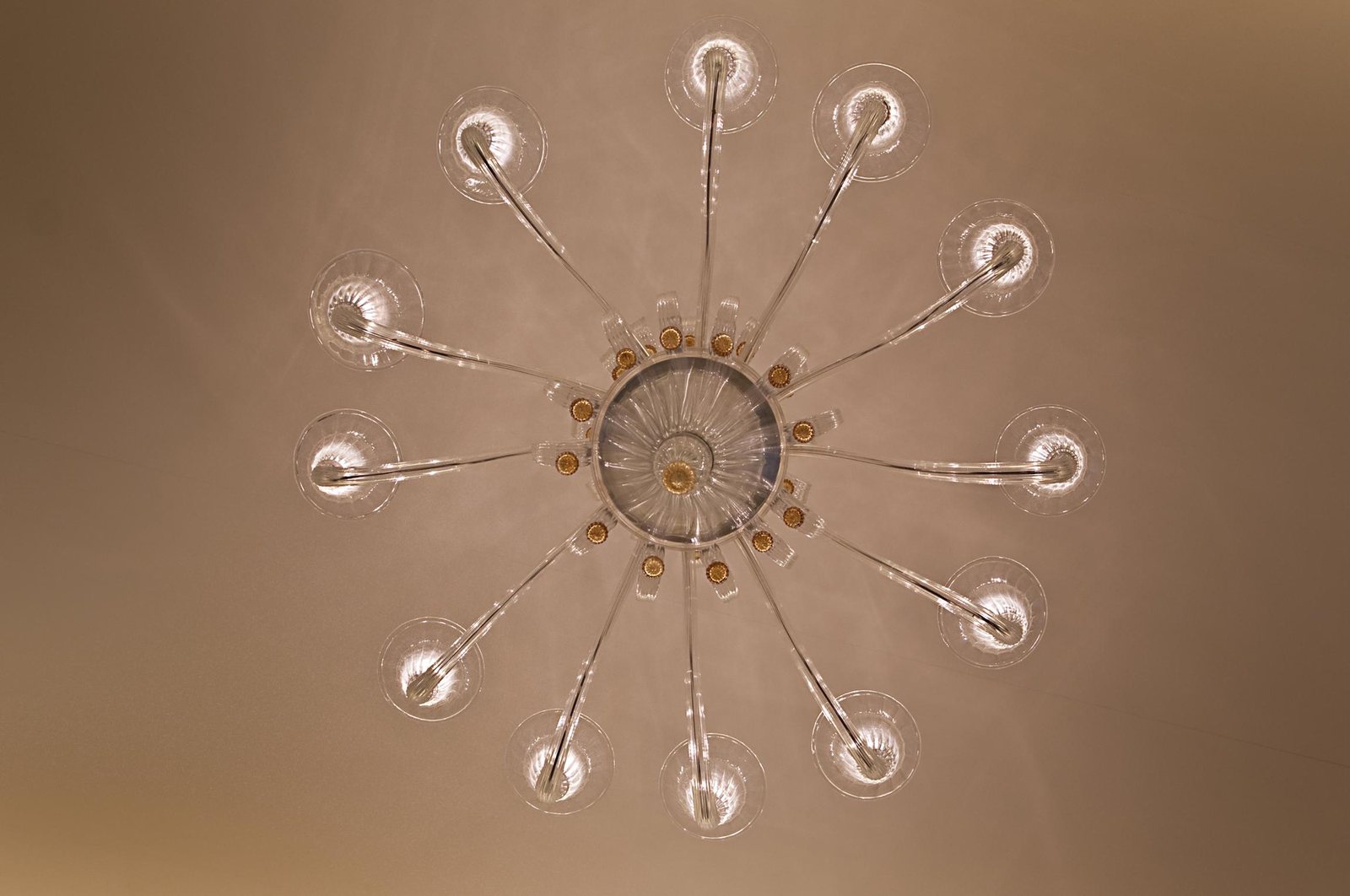
A radial fitting, where a chandelier would not fit
Where the ceiling is low a chandelier is not hung: it is spread. The radial fitting carries twelve glass stems on a central rosette and develops horizontally what elsewhere drops vertically.
Seen from below it is a drawing, not an obstruction. It is how the same glass family reaches the spaces where the clear height is not decided by whoever designs the light.
Four details, and what each of them solves
The mirror, the damask, the texture and the floor: four different constraints, four answers in glass.
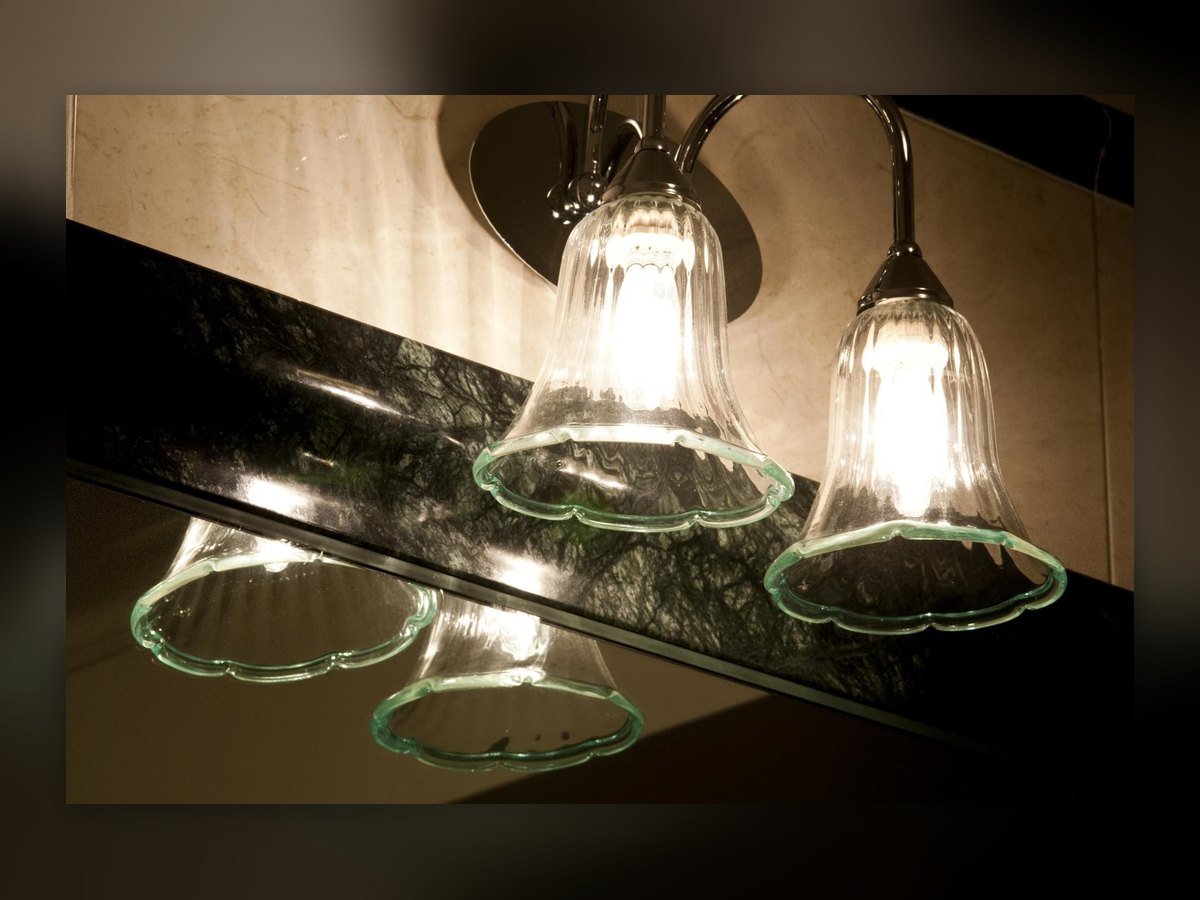
A mirror doubles the sources, not the consumption
Above a dark polished surface the bells appear twice. It is the oldest and most honest trick there is: the room looks brighter because there are more images of the same light, not more light.
Where the glass has to keep quiet
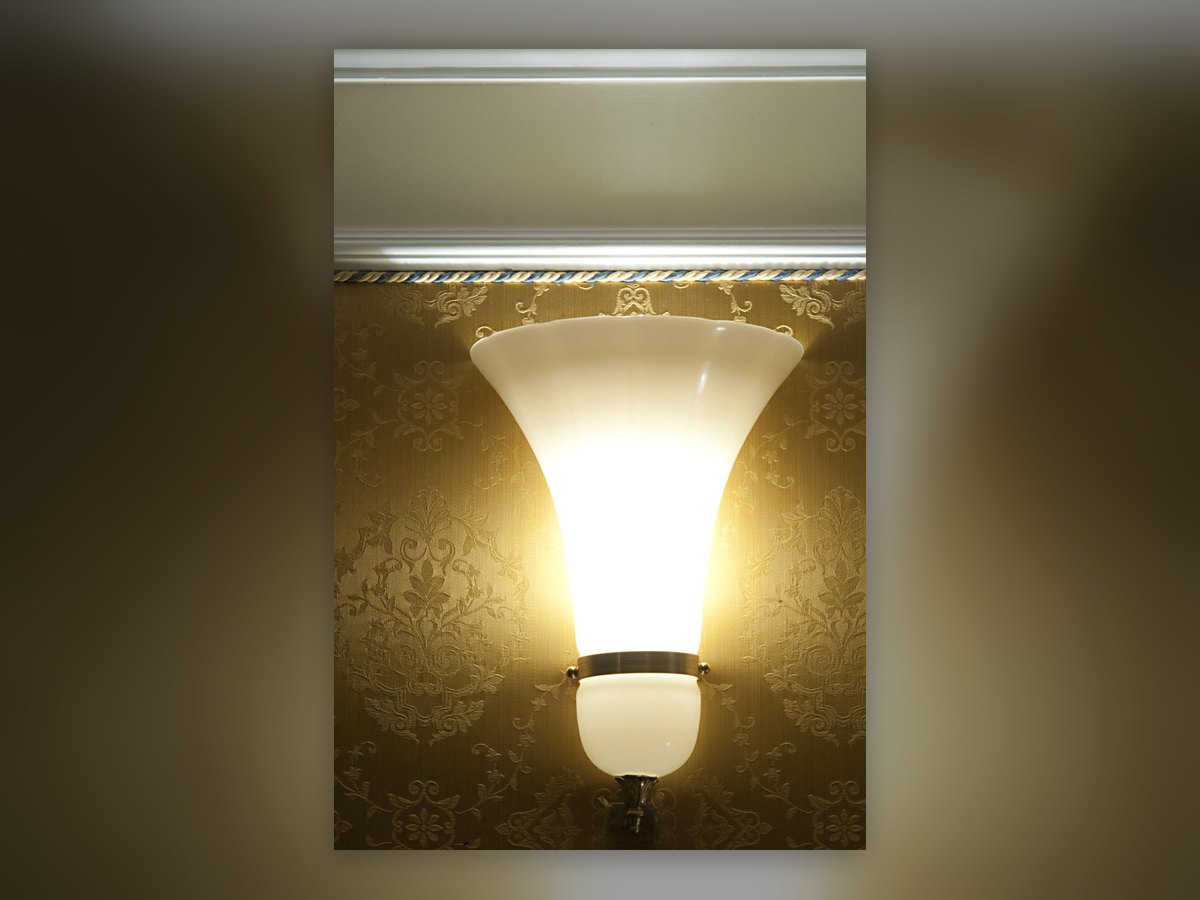
On a gold damask wall a figured fitting would be noise. The trumpet wall light is plain opal glass: it does its job and lets the wall speak.
The texture only shows when lit
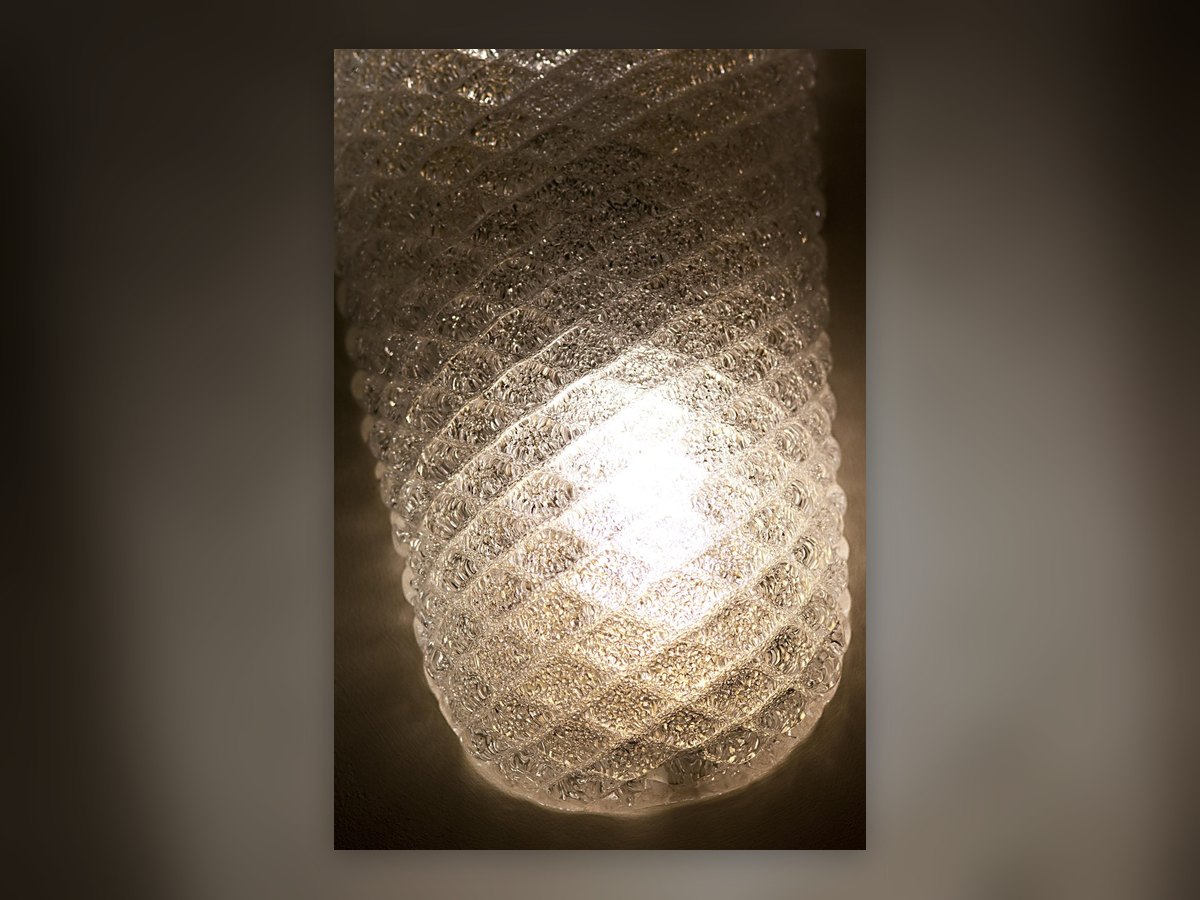
Switched off it is a glass cylinder. Lit, the spiral ribbing becomes the drawing: the working is not added to the light, it is read through it.
Two rosettes, one above and one below
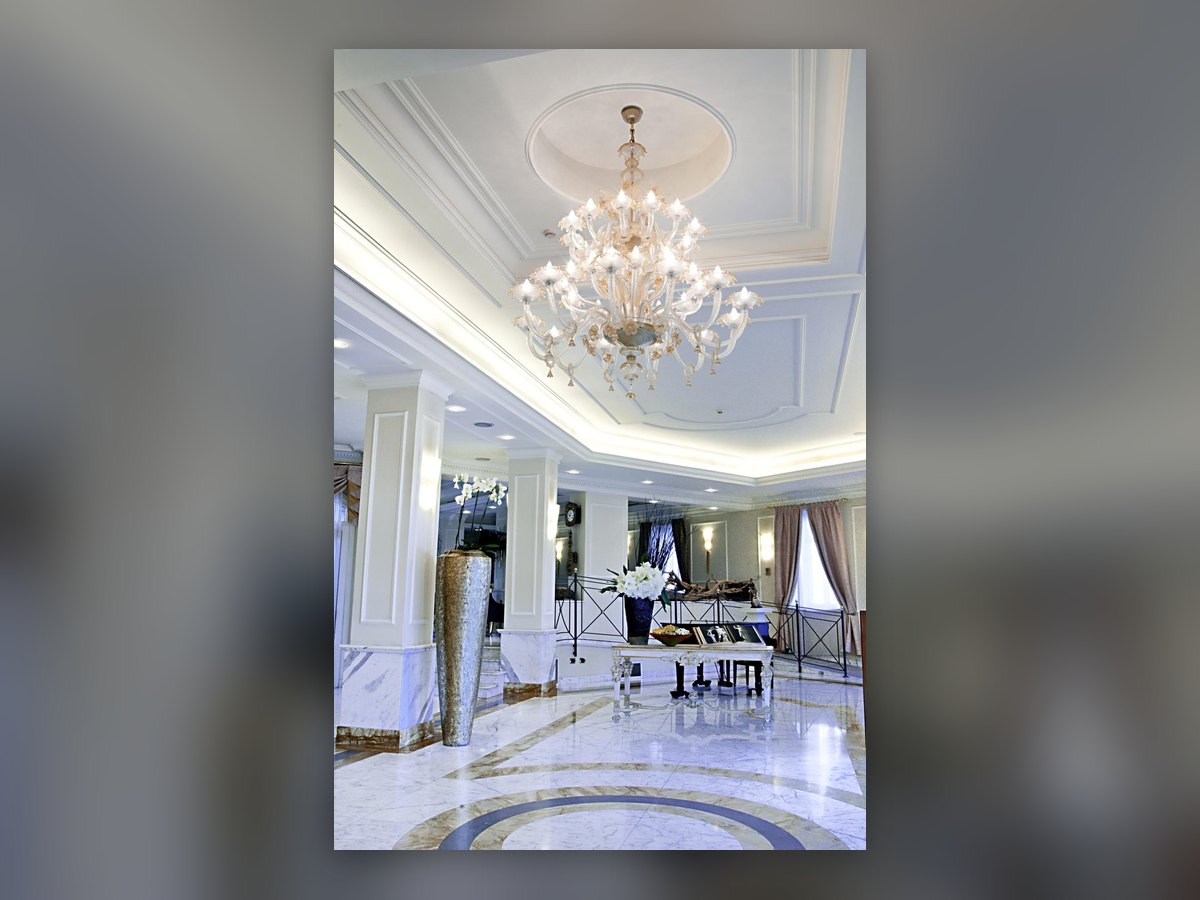
In the lobby the chandelier hangs beneath the ceiling medallion and above the one inlaid in the marble. It is not a coincidence: the floor says where it hangs, long before the ceiling does.
A classic hotel is lit with measure, not with quantity
Send us the plans and the heights: we come back with the right register for each space, and the numbers behind the light.