
Technical Material Selection for Hospitality and FF&E Lighting Projects
A practical reference guide for specifiers and interior architects navigating raw material choices, custom finishes, and fabrication tolerances in high-end contract environments. Learn how to verify physical thresholds and write robust procurement documents that withstand site conditions.
The Challenge in On-Site Execution
Specifying bespoke decorative lighting for commercial environments creates an inherent tension between design intent and structural longevity. Architects often select noble materials based on visual samples viewed under controlled studio conditions, only to discover significant performance drift once luminaires are installed in high-traffic hotel lobbies or coastal resorts. A finish that appears perfect in a board room can quickly degrade under severe environmental factors such as ambient atmospheric moisture, frequent touch points, or chemical cleaning solutions used by maintenance crews.
The problem intensifies when technical drawings fail to account for the physical behavior of traditional artisanal materials under thermal stress and mechanical load. Murano glass components, hand-turned brass housings, and glazed ceramic bases each possess distinct expansion coefficients and structural vulnerabilities. When these materials are combined into complex decorative assemblies without precise engineering boundaries, field failures become common, resulting in costly retrofits, delayed operational handovers, and compromised brand equity for the hospitality brand.
Critical Metrics and Their Practical Meaning
Evaluating decorative raw materials requires moving beyond descriptive aesthetics toward quantifiable physical and mechanical metrics. For copper alloys like solid brass, specifiers must evaluate galvanic stability and the exact chemistry of the protective coating applied to preserve brushed or hand-burnished surfaces. Uncoated brass will naturally oxidise when exposed to air and moisture, whereas electroplated or clear-lacquered surfaces hold an invariant baseline. Understanding the specific micro-thickness of transparent acrylic or epoxy coatings determines whether a fixture retains its specified luster after years of regular housekeeping.
In hand-blown Murano glass, thermal shock resistance and wall thickness homogeneity serve as the primary structural benchmarks. Artisanal glass production naturally yields subtle internal variations, but severe wall ratio discrepancies introduce catastrophic stress points during prolonged lamp operation. For glazed ceramics, craze resistance and absorption rates dictate how well a fixture handles humidity fluctuations without micro-fracturing. Finally, woven fabric shades require strict evaluation of light transmissive density and thread count to ensure structural rigidity while delivering controlled, glare-free optical performance.
| What | Value | When |
|---|---|---|
| Protective coating thickness for satin brass | 25 to 35 microns dry film thickness | Specified for high-touch decorative brass fixtures in commercial spaces |
| Mouth-blown Murano glass wall thickness | 4 mm to 6 mm with maximum 2 mm variation | Engineering custom blown glass diffusers exposed to thermal loads |
| Glazed ceramic water absorption rate | Under 0.5 percent total mass absorption | Selecting ceramic bases for humid environments or hospitality guest rooms |
| Pleated fabric shade material density | Minimum 220 grams per square meter | Constructing structured pleated shades for public area lighting |
Physical Thresholds: Satin Brass, Blown Glass, and Glazed Ceramic
Satin brass finishes intended for commercial hospitality applications should be protected by high-solids polyurethane or electrophoretic clear coatings with a minimum dry film thickness of 25 to 35 microns. This protective layer ensures robust resistance to direct skin contact, moisture, and mild abrasion without altering the depth of the underlying mechanical brushing. Specifying lower coating thicknesses often leads to premature tarnish along exposed edges, requiring premature re-finishing or complete replacement of decorative metalwork.
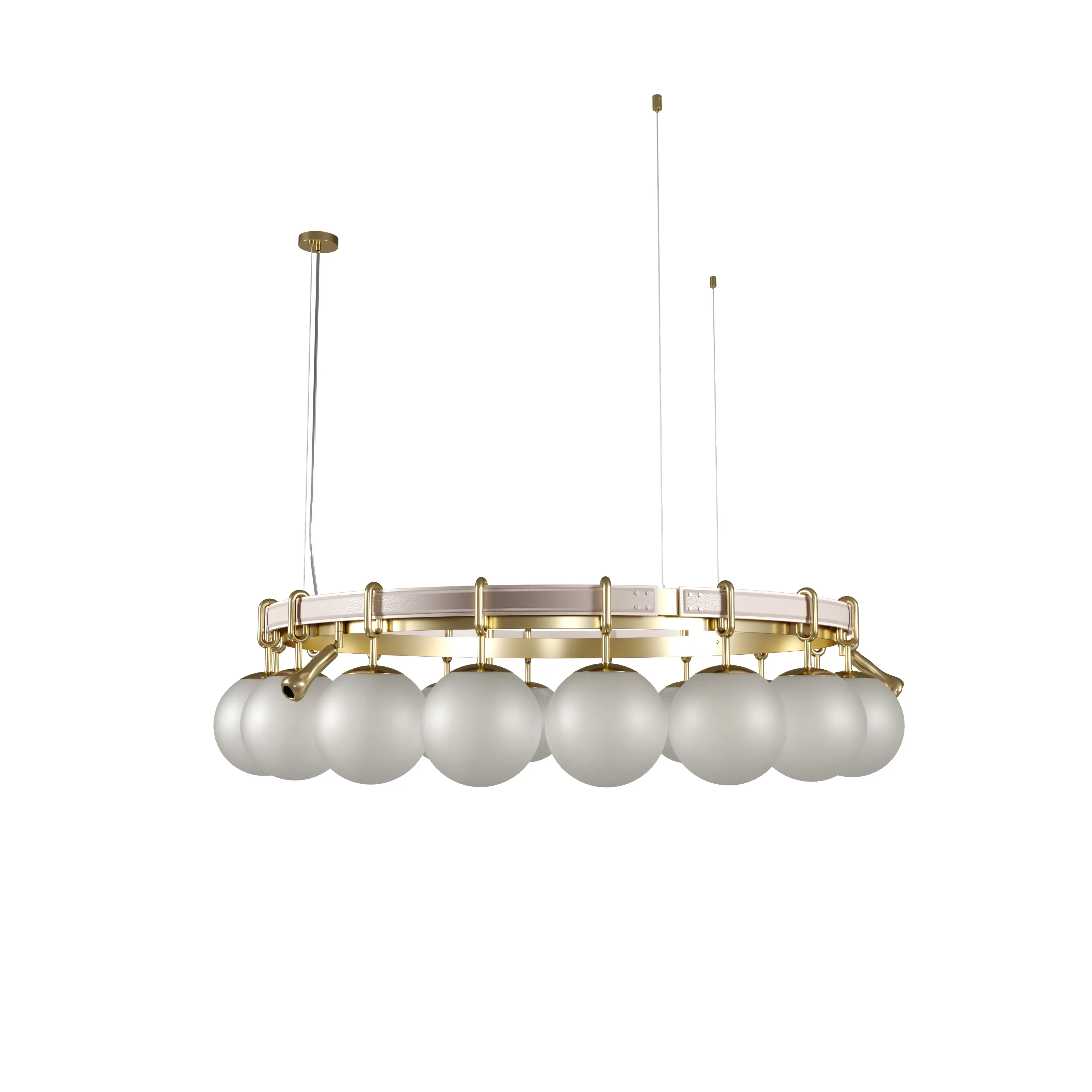
For mouth-blown Murano glass diffusers, dimensional wall consistency must be maintained within a tight target range of 4 mm to 6 mm across the main body. Deviations exceeding 2 mm across a single structural plane introduce localized thermal trapping, which significantly increases the risk of cracking when high-output LED drivers or traditional halogen light sources operate within compact shades.
Glazed ceramic structural components require a water absorption rate under 0.5 percent and a minimum glaze thickness of 0.3 mm to prevent humidity ingress and micro-crazing over time. Pleated fabric shades specified for public corridors or guest suites must maintain a flame-retardant density threshold exceeding 220 grams per square meter, ensuring structural pleat retention and mechanical stability under continuous airflow and maintenance routines.
Writing Watertight Specifications for Procurement
Translating design concepts into watertight FF&E tender documents requires exact technical terminology rather than generic visual references. A specification sheet should never state brushed brass finish, but should instead mandate solid C36000 brass alloy with a 180-grit mechanical satin brush, degreased, and sealed with an electrophoretic baked coat. Clearly defining raw alloy grades, mechanical preparation steps, and sealed topcoats eliminates manufacturer substitution during competitive bidding phases.
For custom hand-blown glass elements, procurement documentation must define acceptable artisanal tolerances alongside strict defect boundaries. Specifiers must explicitly limit allowable seed and bubble inclusions to under 1.5 mm in diameter, capping frequency to a maximum of two inclusions per visual quadrant. Documenting these physical metrics within the main schedule protects the architectural firm against low-tier sub-contractor substitutions that compromise the project overall finish level.
Field Mistakes That Cause Downstream Failures
A frequent error made by design teams involves specifying untreated or raw burnished metals in coastal or high-humidity environments. Raw brass and unsealed bronzes react rapidly to saline air, developing uneven oxidation and green copper carbonate deposits within weeks of installation. Unless dynamic organic patina formation is intentionally requested by the client, specifying unsealed metallic elements in guest bathrooms or maritime locations always leads to maintenance disputes and client dissatisfaction.
Another costly mistake arises from ignoring the structural mounting interface between heavy ceramic or glass bodies and internal metal armatures. Securing glass globes using rigid metal-to-glass threaded connections without intermediate elastomeric or silicone gaskets inevitably leads to stress fractures caused by micro-vibrations and differential thermal expansion. Every mechanical junction combining materials with dissimilar expansion rates must integrate resilient dampening components to absorb dynamic physical loads.

Key Technical Questions to Ask the Manufacturer
Before finalizing fixture orders, specifiers must subject lighting manufacturers to rigorous technical vetting regarding material origin and finishing processes. Asking targeted questions regarding clear-coat application methods, glass annealing cycles, and thermal dissipation paths reveals whether a supplier possesses real engineering capability or merely packages imported components. Direct inquiries regarding testing protocols help identify potential manufacturing defects before units leave the factory floor.
Furthermore, design teams should request detailed technical datasheets covering all secondary materials, such as internal mounting brackets, structural adhesives, and protective gaskets. Confirming how decorative metalwork is isolated from dissimilar metals prevents galvanic corrosion across structural joints. Establishing these engineering requirements during initial factory consultations prevents unrecorded design modifications during production, protecting both the architectural intent and the long-term investment of the client.
What to ask the supplier
- What specific chemical formulation and application method are used for clear protective coatings on satin brass components?
- What annealing cycle and wall thickness tolerances are applied during the production of custom Murano glass shades?
- How are differential thermal expansion rates handled at mechanical junctions between glass, ceramic, and metal components?
- What internal gasket materials are specified to prevent direct metal-to-glass or metal-to-ceramic friction?
- What clear-coat durability testing has been performed on metallic finishes intended for high-humidity installations?
Weight is a material decision before it is a structural one
Choosing solid brass over plated steel, or hand-blown glass over acrylic, is usually discussed as a question of appearance and cost. It is also a question of load, and the load lands on a fixing point that was designed months earlier by somebody who was never told.
The difference is not marginal. The same shape in three materials can vary by a factor of three in mass, and a ceiling prepared for the lighter option cannot take the heavier one without being opened again.
The remedy is a single number carried through the process: a declared maximum weight per point, agreed when the ceiling is designed and treated as a constraint on the material choice rather than a consequence of it.
Certificates: what a decorative piece actually needs
Documentation requirements for decorative fittings are often copied from technical ones, which produces a list that nobody can satisfy and everybody ignores. The set that genuinely applies is short and specific to the material.
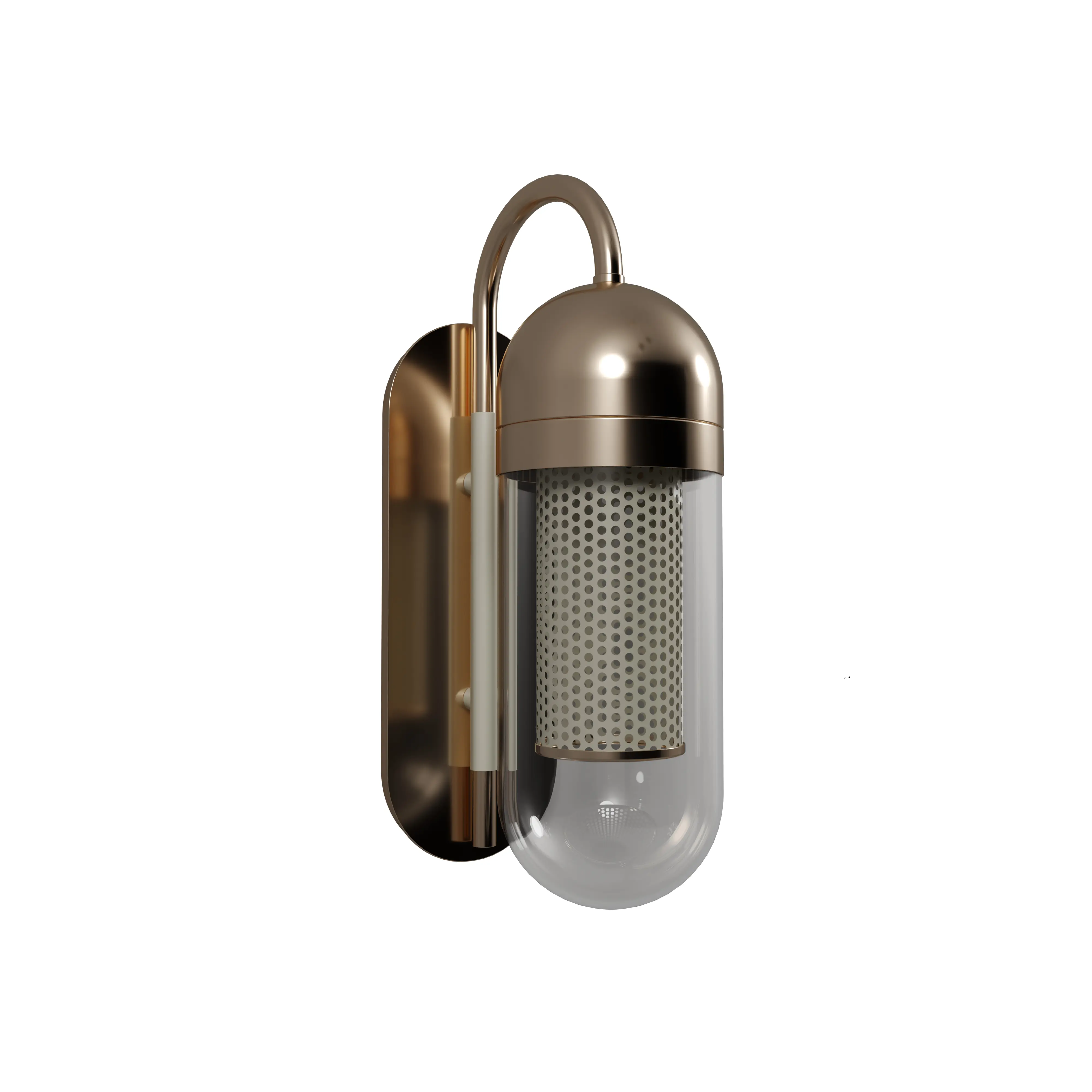
Textile shades need a reaction-to-fire classification appropriate to the space, and that classification belongs to the fabric and its treatment rather than to the fitting. Glass needs to be identified as toughened or laminated where it is above a head. Metal finishes need to declare any surface treatment that could be affected by cleaning.
Asking for those three, dated and specific, is more useful than asking for a folder. And it is far more likely to be answered, because a maker can produce them without inventing anything.
Fragility travels badly, and packing is part of the specification
A hand-blown element that survives the workshop can arrive broken, and the loss is not the piece: it is the six weeks it takes to make another. On a supply of thirty pendants, two breakages in transit can move a handover.
The variables are known and controllable: individual crates rather than shared ones, orientation marked, foam that supports the form rather than the box, and a spare or two shipped with the batch rather than promised afterwards.
Written into the order, this costs a small percentage. Left unwritten, it is the most common cause of a delivery that arrives complete and is not.
Continuity of a material is not continuity of a product
A catalogue fitting disappears when the model is discontinued. A material behaves differently: a glass colour, a ceramic glaze or a brass alloy can remain available for decades, and what changes is the batch rather than the existence.

This is why a bespoke piece made from a stable material is often safer over time than a catalogue product with a fashionable finish. The question to ask is therefore about the material and not about the model: how long has this glaze been in production, and is it made in house?
Where the answer names a specialist supplier, the follow-up is worth asking too. A finish that depends on a single small workshop somewhere else has a continuity risk that nobody in the chain has priced.
The sample board is a contract, not a mood board
Most projects assemble a board of finishes early, and most boards are treated as an indication of direction. On a bespoke supply the board is more useful than that: it is the reference the delivered pieces will be measured against, and it only works if it is dated, labelled and kept.
Two copies solve the argument before it starts — one with the designer and one with the maker, each signed on the same day. It costs an hour and it converts every later discussion about colour from opinion into comparison.
In short
- Base material specifications on measurable physical metrics such as coating thickness, wall variation, and absorption rates rather than subjective visual samples.
- Include explicit alloy grades, mechanical surface preparation steps, and clear-coat types in contract procurement schedules to prevent material substitution.
- Mandate resilient intermediate gaskets at all mechanical interfaces connecting glass or ceramic to metal structural arms.
- Verify manufacturer annealing processes and protective finish testing protocols prior to approving final production drawings.
From our catalogue: Bespoke Handcrafted, OREADI Marble Lamps and WoodTailorClub.
A project under way?
Upload the specification or configure the rooms: the bill of quantities comes back with fittings and quantities, ready for your next meeting.
Open the advisor