Completed project
Hotel Carpegna: two families in one hotel, and you tell them apart at a glance
Opal glass bowls and hulls signed with an amber glass flower, and mottled gilded discs above the restaurant. The light is ours: two languages kept apart, one per kind of room.
Project data
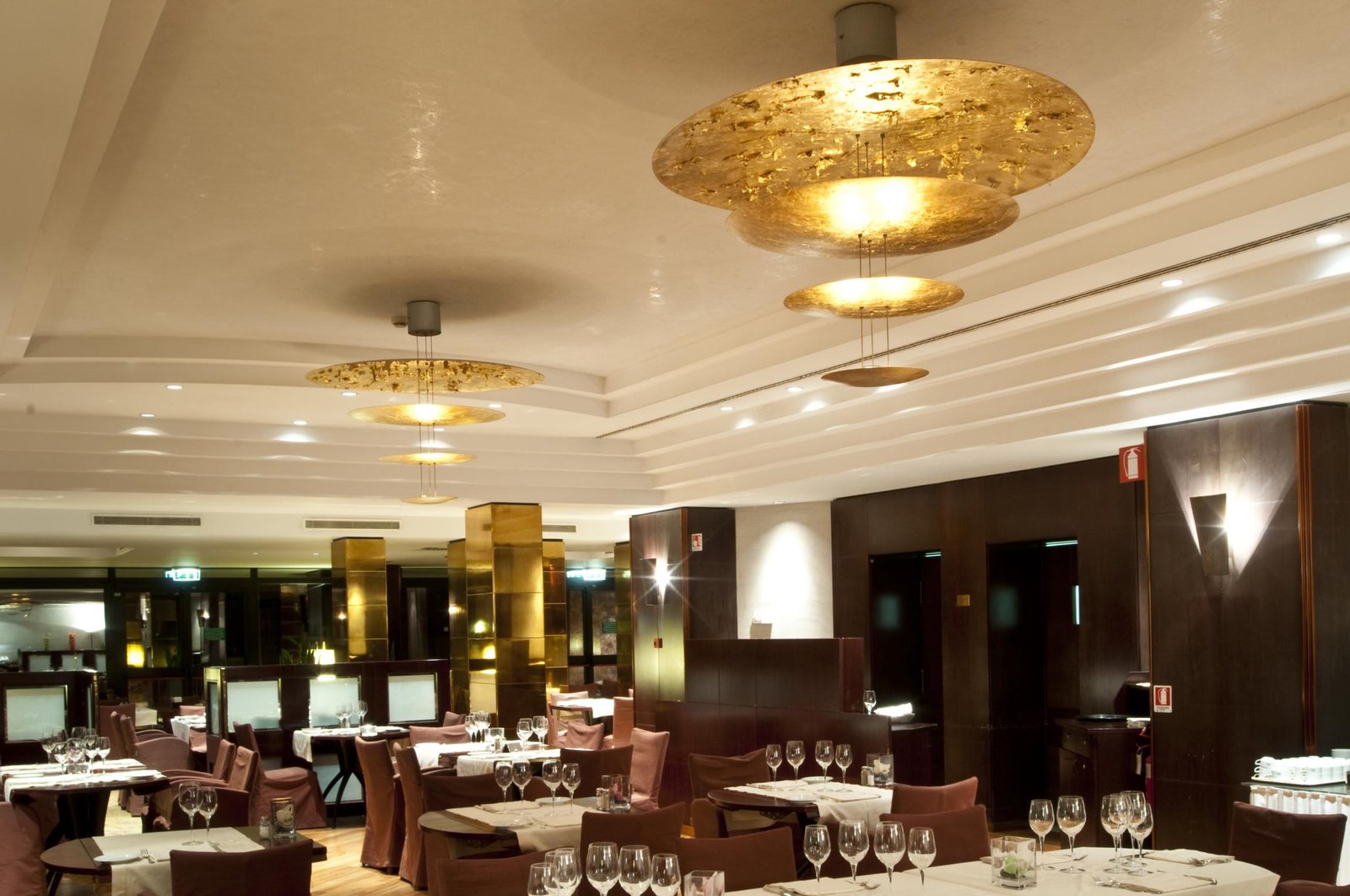
Above the tables, discs that do not look like lamps
No chandelier hangs in the restaurant. Discs hang: gilded plates on wires, with the source hidden underneath. From the table you do not see a bulb, you see a ceiling that has come down.
The surface is mottled in irregular flakes, and that changes the result more than it sounds: a gilded disc does not make the same light as a painted one, because the light passes where the flakes open instead of bouncing evenly.
An amber glass flower, which is not there to light
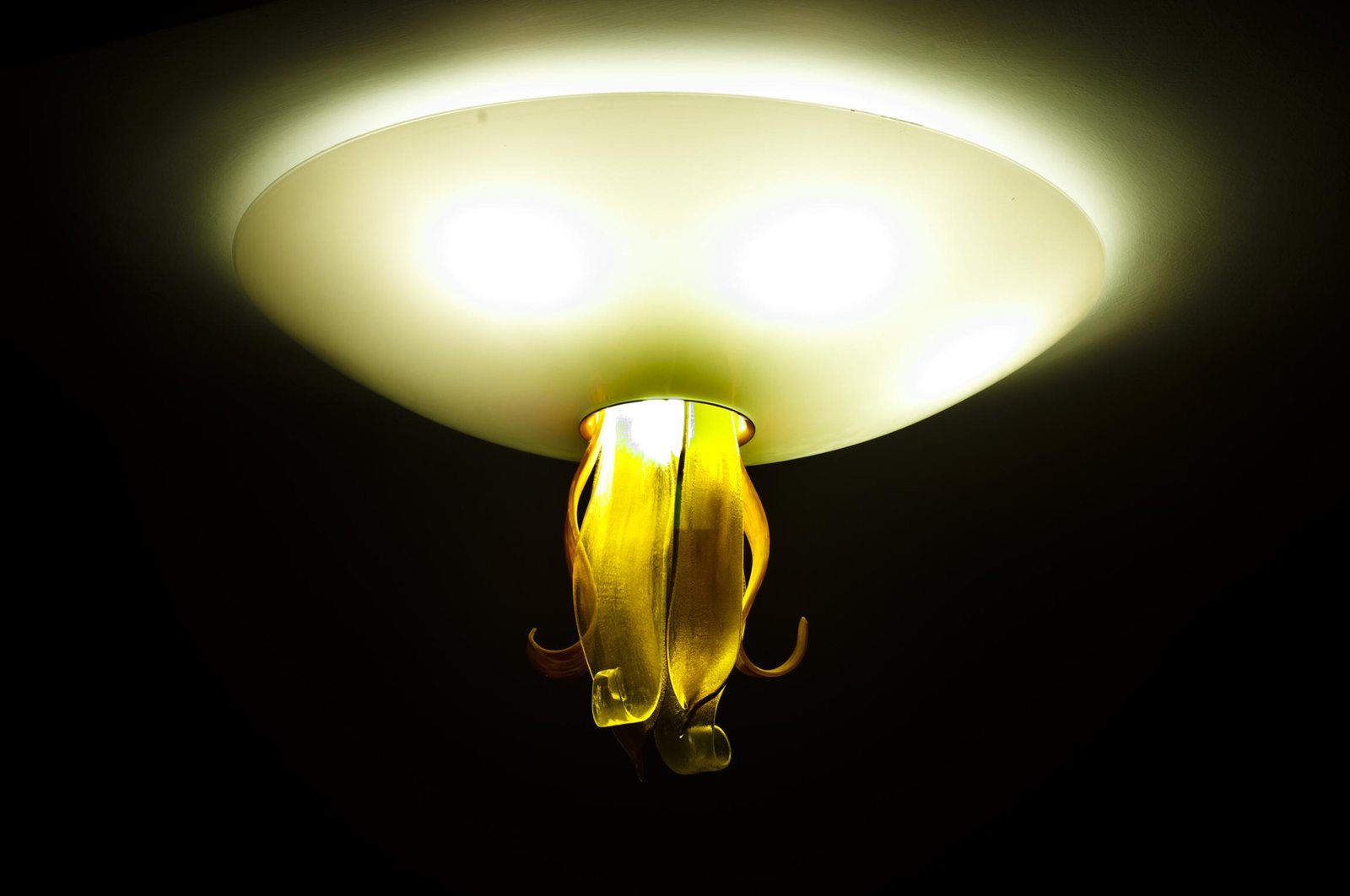
The second family is opal glass — ceiling bowls, wall hulls — and it has a single signature: a small amber glass flower hung beneath the bowl, its petals curled.
It adds not one lumen. It adds a warm point where everything else is white, and it means one hotel’s opal bowl does not look like everybody else’s. It is the kind of detail that costs little and is remembered a lot.
A hull on the wall: all light, no bulk
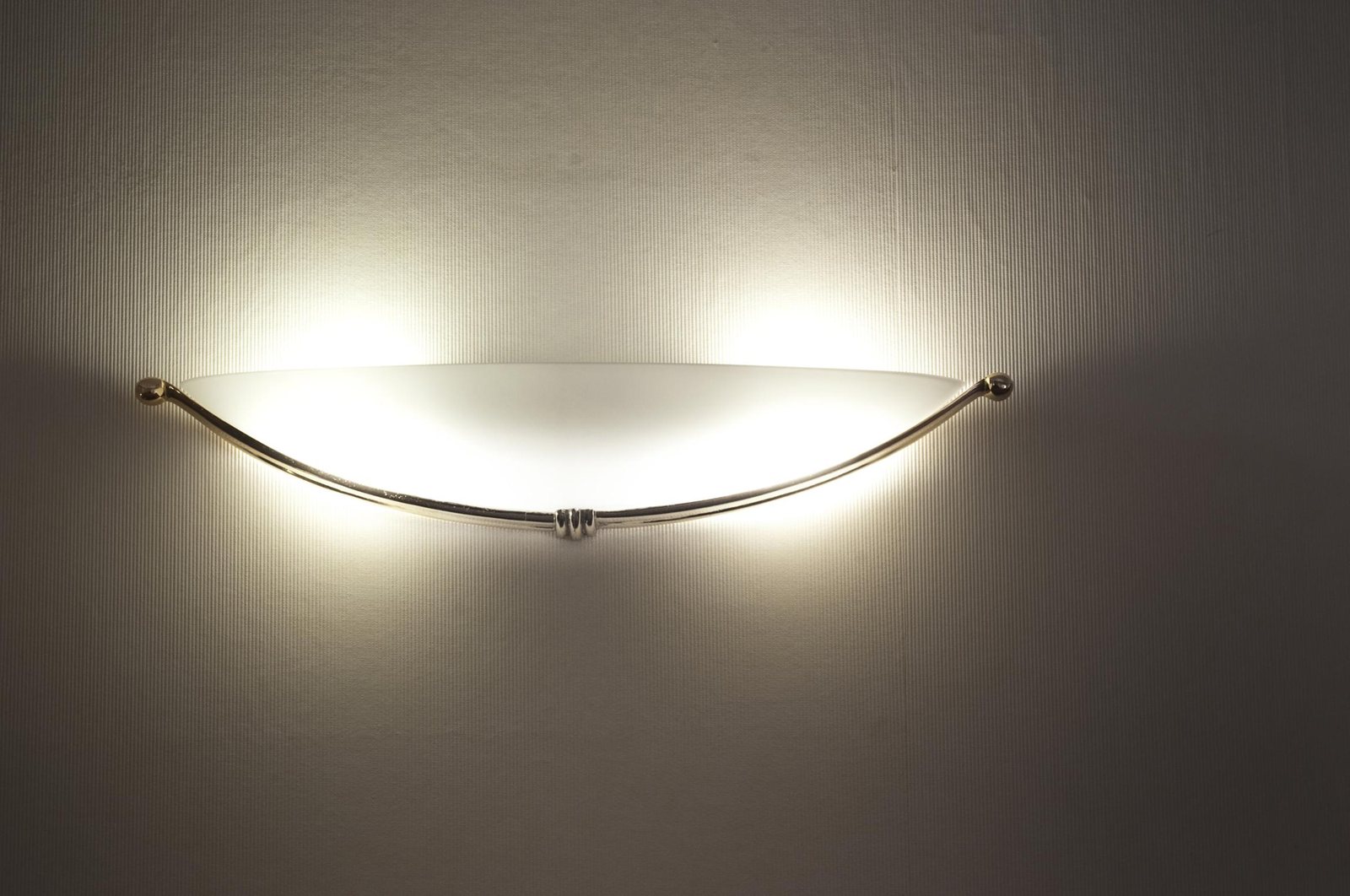
Along corridors and in the rooms the same family goes flat: an opal glass hull held by a slim metal bow, standing a few centimetres off the wall.
It is the shape you choose when the passage is narrow and the light still has to go up: the body disappears, the glow on the wall remains.
Four looks, from the flake to the room
The disc close up, the amber signature, the room that has to keep quiet, and the bedroom.
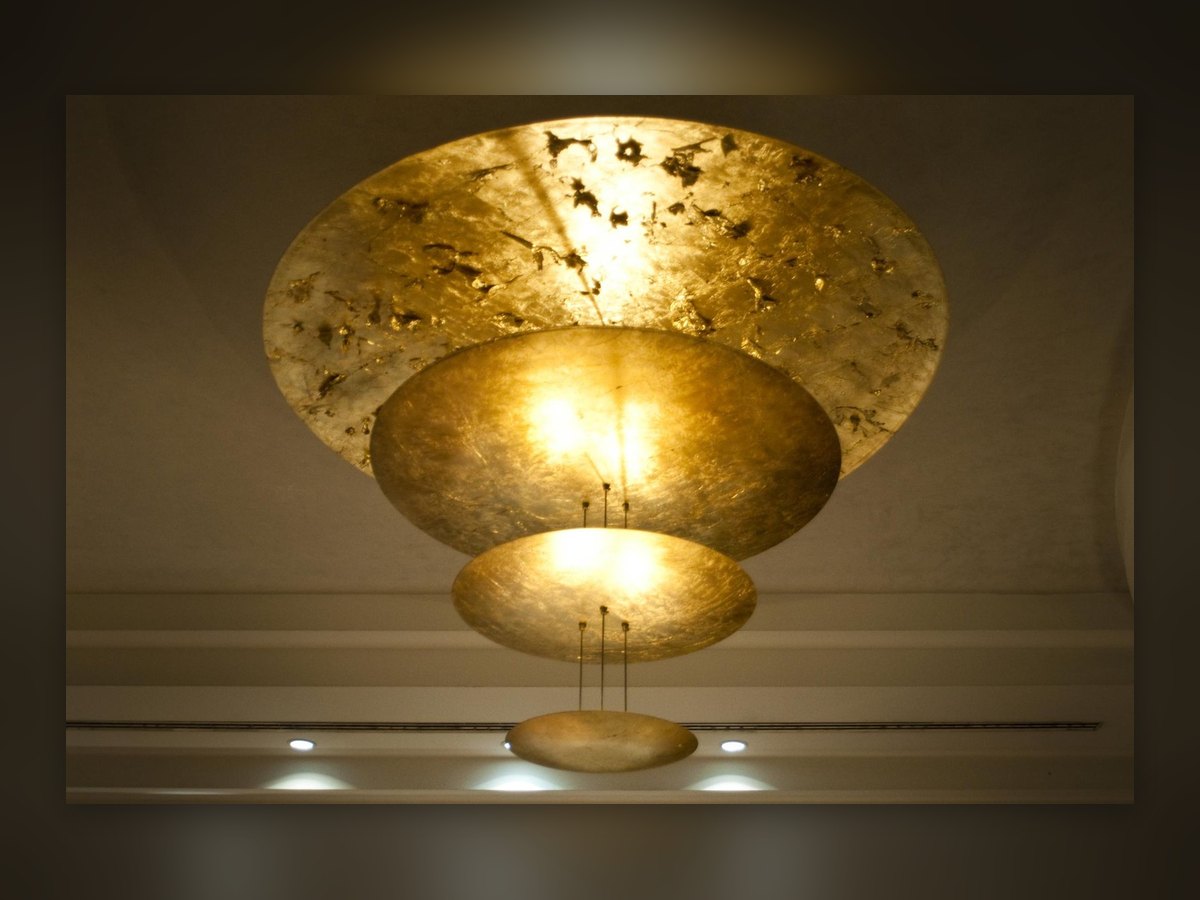
Close up, the disc is not smooth
The surface is mottled in irregular flakes, and when lit the light passes where the flakes open. That is why a gilded disc does not make the same light as a painted one.
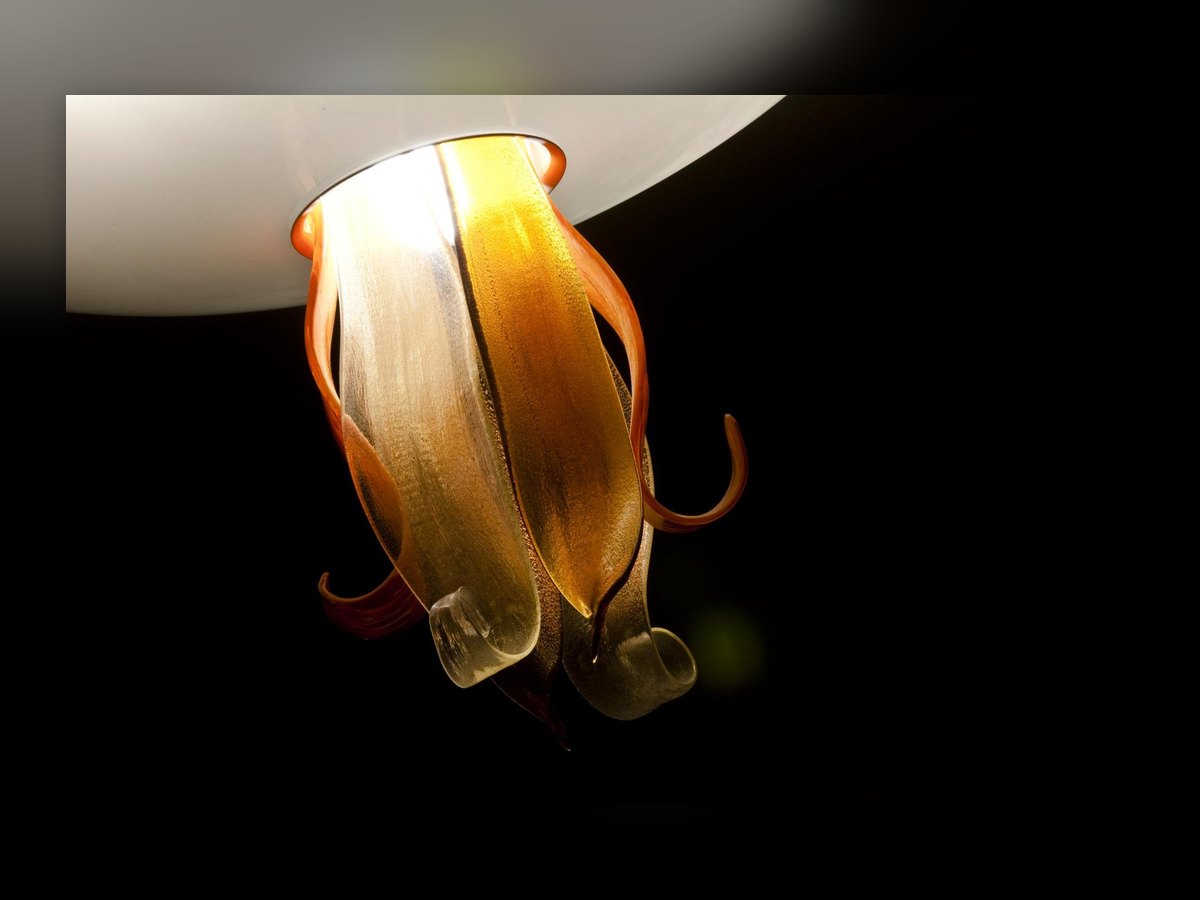
The flower does not light: it signs
Hung beneath the bowl, the amber glass flower adds not one lumen. It adds a warm point where everything else is white, and gives the family a name.
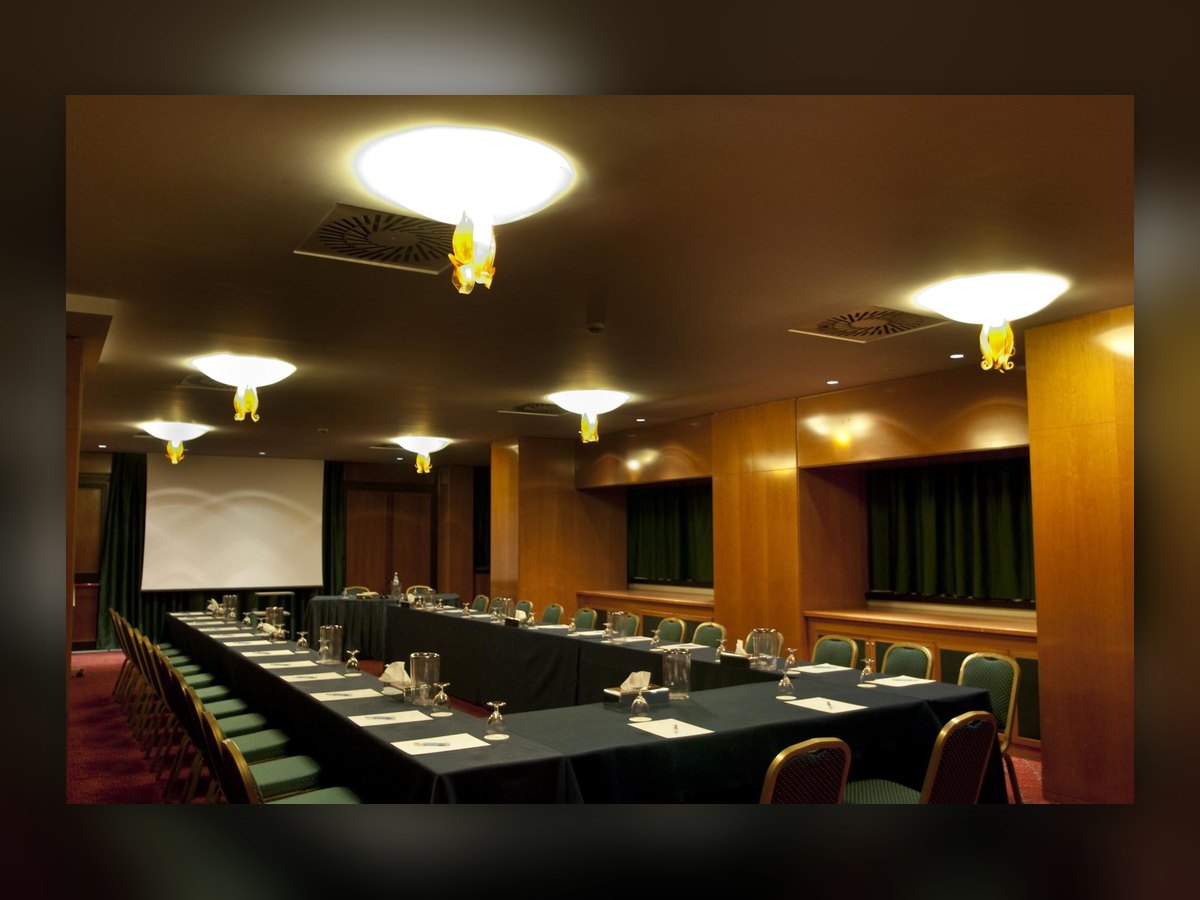
A meeting room is not a restaurant
Here people read and project. The bowls stay close to the ceiling and send the light upwards: no reflections on polished tables and no sources in the eyeline of whoever is watching the screen.
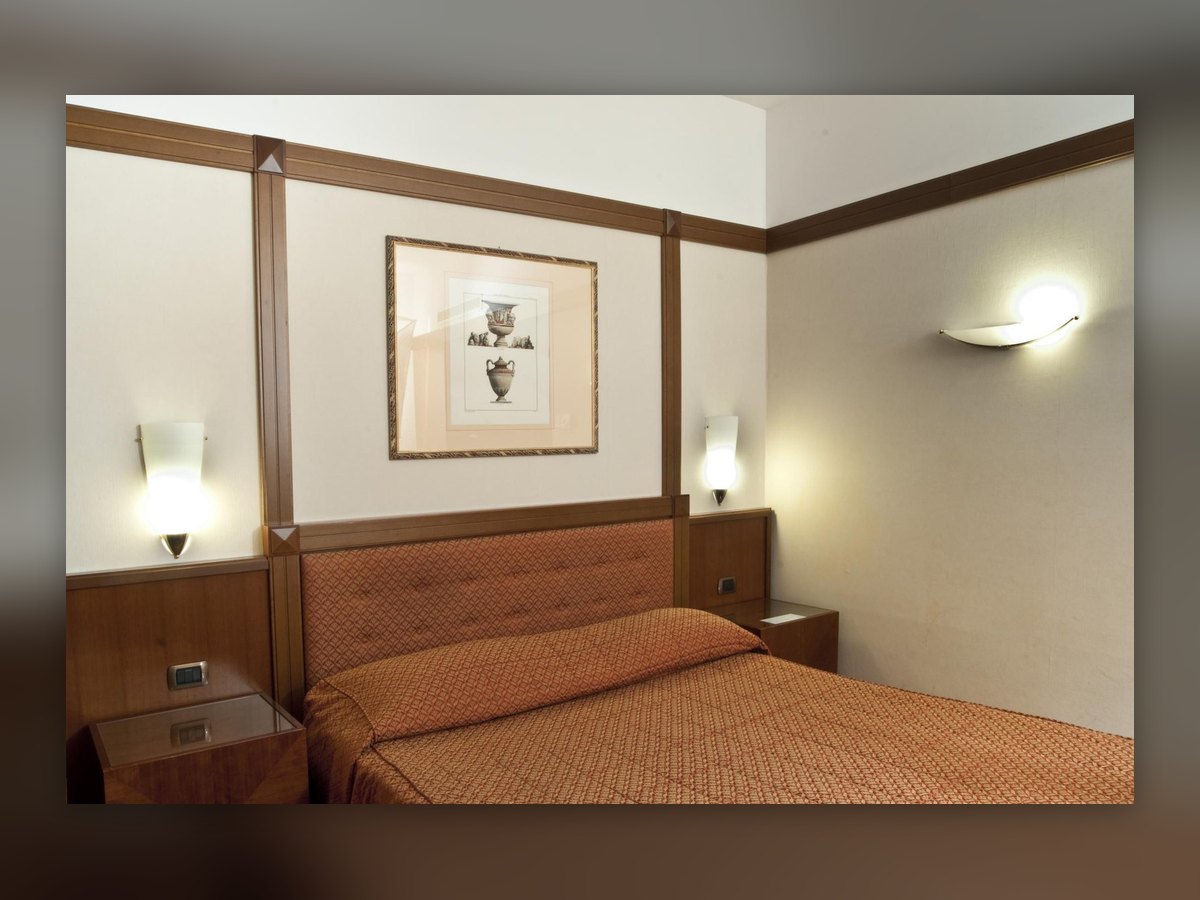
In the room, back to small
Two wall lights either side of the bed and one on the far wall. The same opal glass as the restaurant, brought down to the size of a room where people sleep.
Two families are kept apart by room, not blended
Send us the plans and tell us what happens in each room: we come back with which family goes where, and the numbers behind the light.