Completed project
NH Excelsior, Siena: a Venetian chandelier in black, and the light somewhere else
Black blown glass in the lobby, and precise service light where people read and wash. The light is ours: two different trades in the same hotel, and neither pretends to be the other.
Project data
A Venetian chandelier that is not there to make light
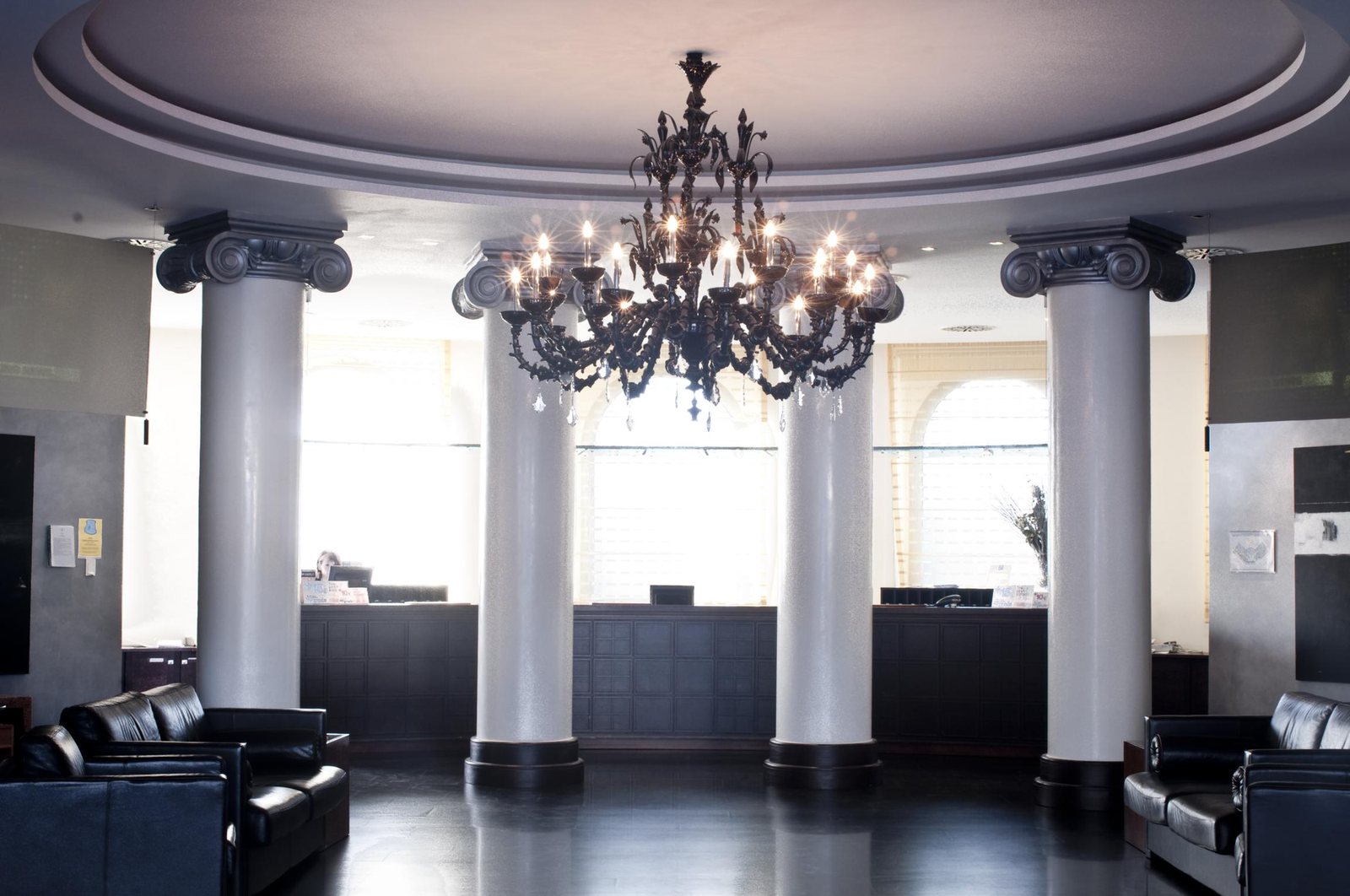
The lobby has a chandelier of classic form — twisted arms, cups, candles, drops — but entirely in black glass. Between white columns and a dark floor it does not light the room: it occupies it.
That is a choice to state to the client beforehand, not afterwards: if a hotel expects the lobby chandelier to do the work, black is the wrong answer. Here the brief was different, and the rest of the installation was designed accordingly.
Black changes the trade of the glass: it does not diffuse, it reflects
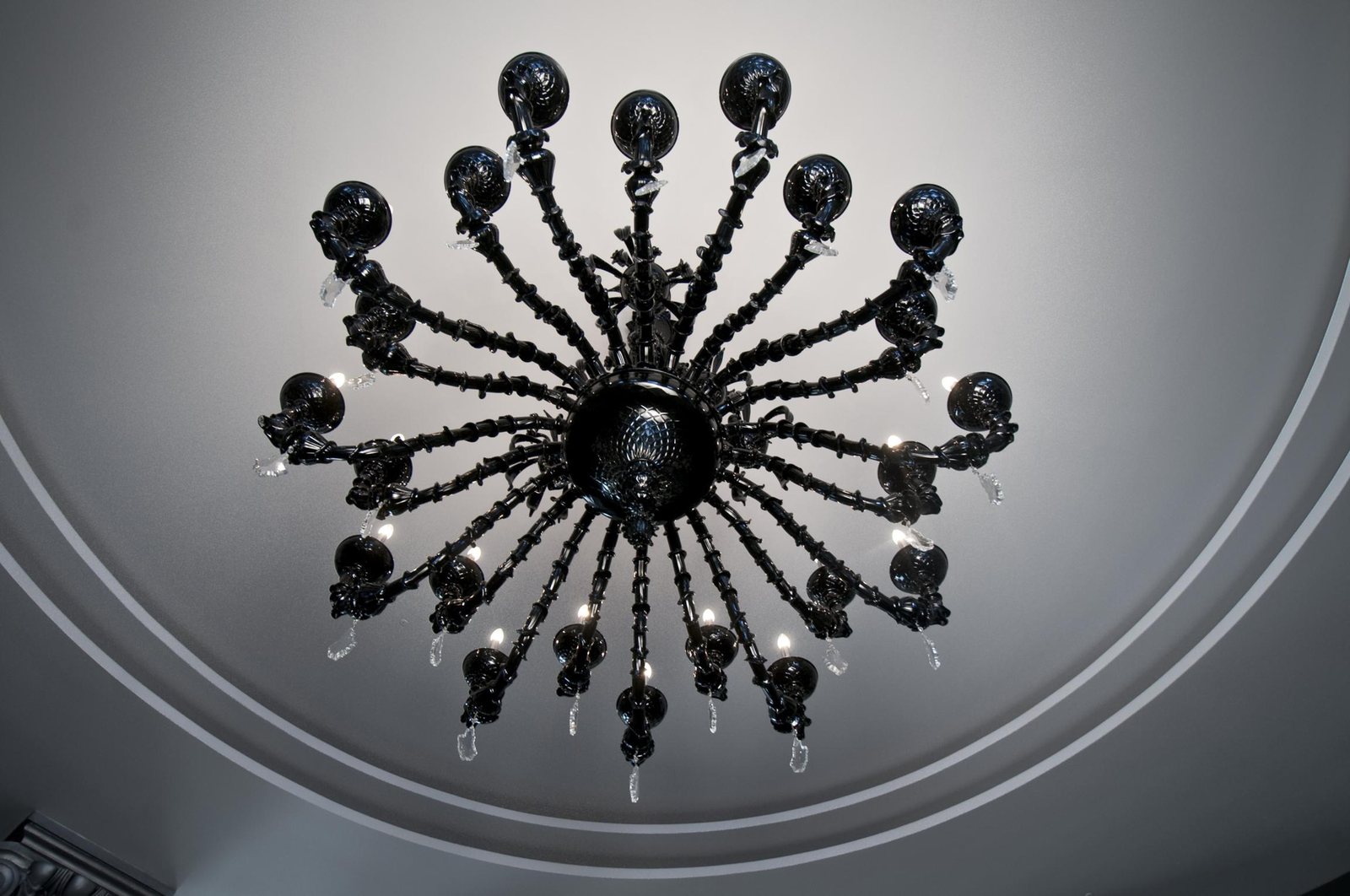
Pale glass takes the lamp’s light and spreads it. Black glass does not let it through: what you see are the reflections on the surface, and the shape those reflections draw against the pale ceiling.
From below it is obvious: the arms open radially inside the round recess and what reads is a drawing, not a source. The only parts that sparkle are the clear crystal drops.
So where is the light? Close to people’s hands
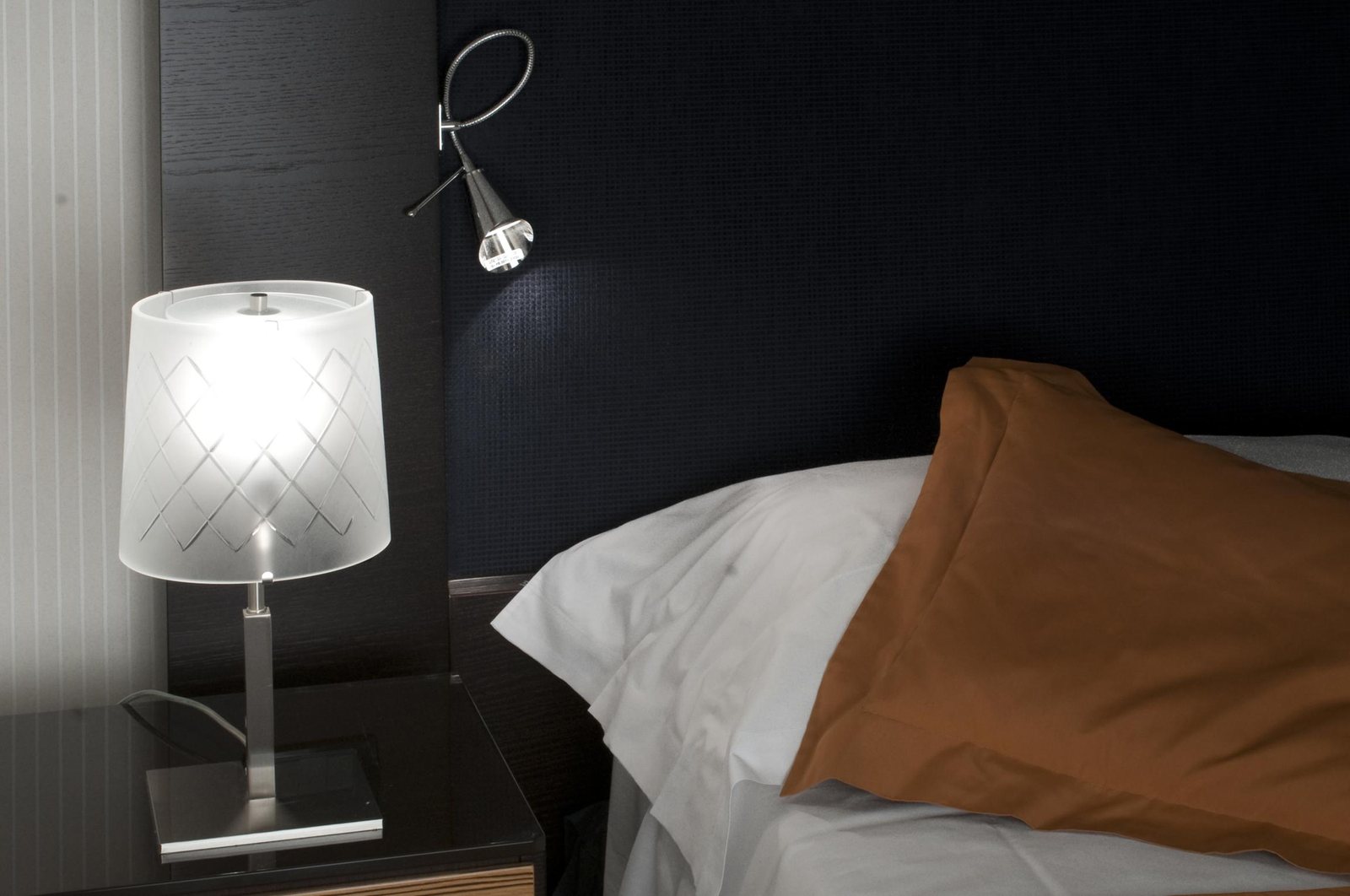
Once the chandelier is relieved of lighting the room, something else has to do it. In the guest room: a flexible arm aimed at the pillow and an etched glass lamp on the bedside table. In the bathroom: an opal cylinder on a chrome bracket.
They are small pieces, and they are the ones guests actually touch. A hotel is remembered for the lobby chandelier and judged by the light on the bedside table — and the two are designed together, not one after the other.
Four pieces, two trades
Glass that reflects and glass that lets light through: you tell them apart once they are lit.
A clear drop in the middle of the black
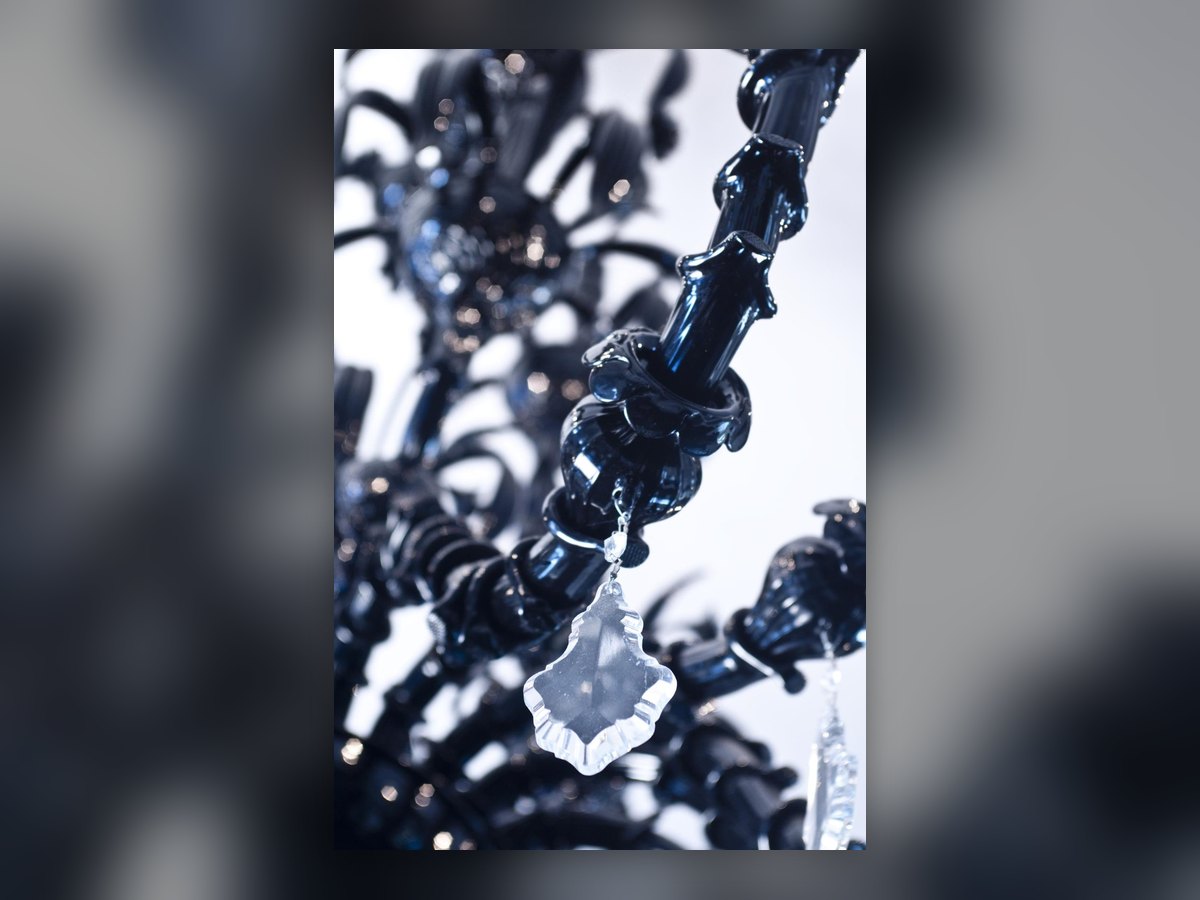
The crystal drops are the only parts that let light through. On a pale chandelier you would not notice them: on a black one they become the only thing that sparkles.
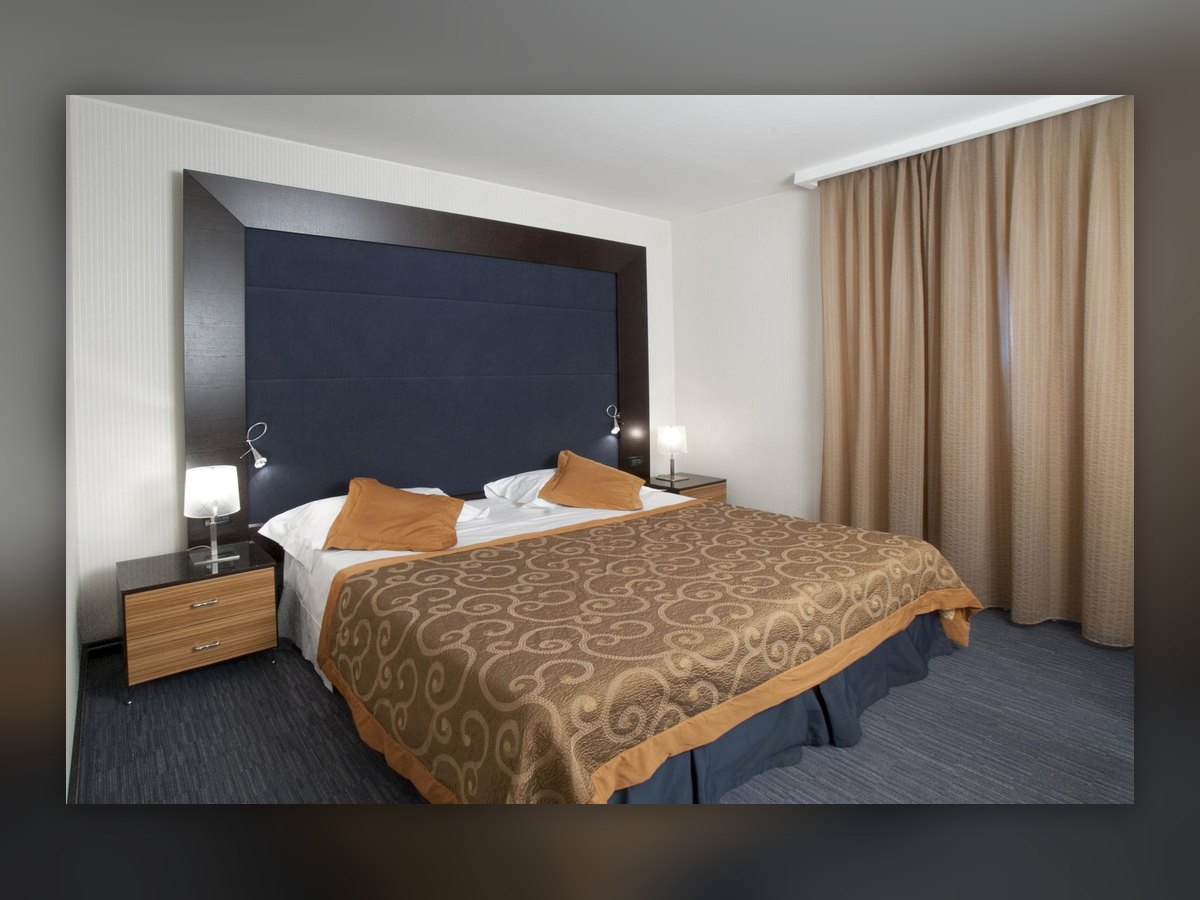
In the room there is no place for a chandelier
The room is low and the bed needs light where it is used. No suspension: two reading lights at the sides and a lamp on the bedside table, with the upholstered headboard absorbing the rest.
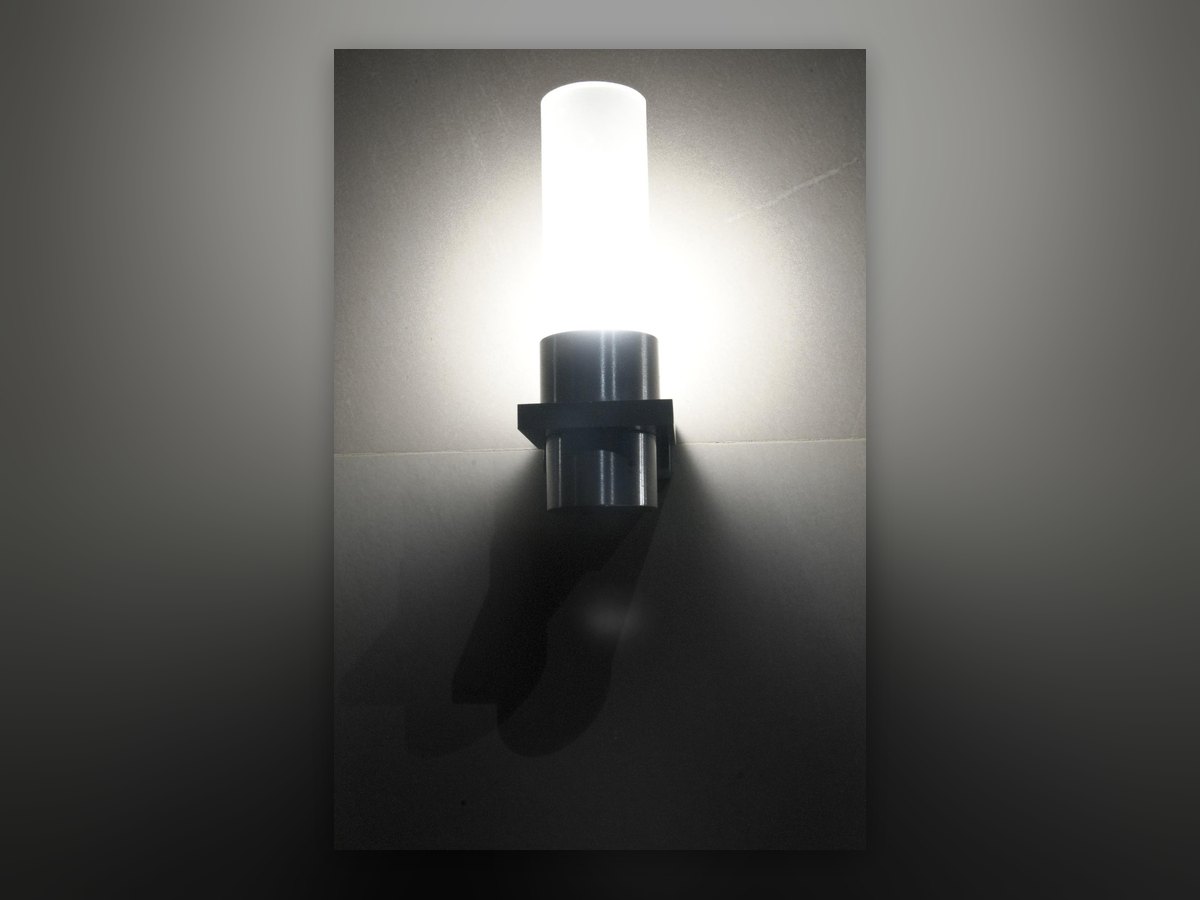
Where the light only has to work
An opal glass cylinder on a chrome bracket has nothing to say. It is the service register: it switches on, lights a mirror and disappears.
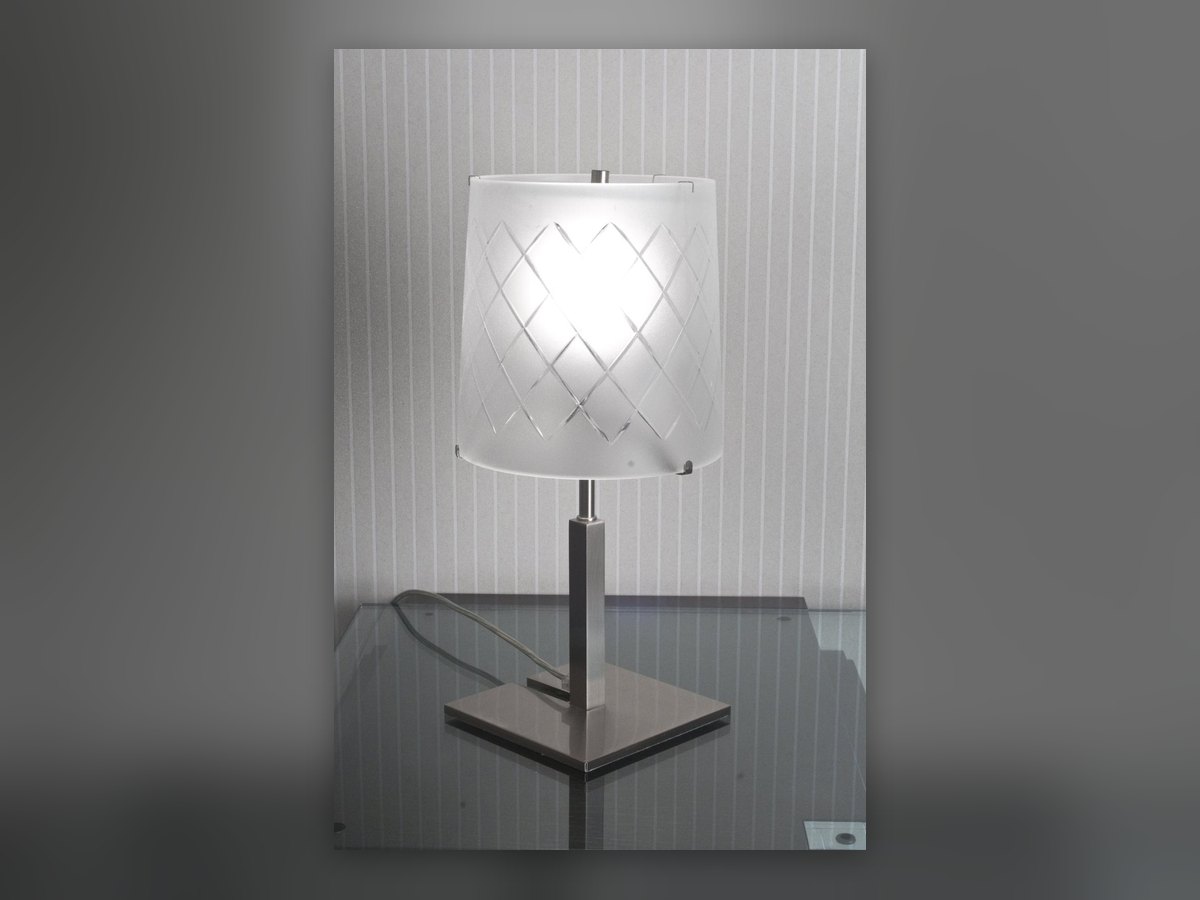
The etching only reads through the light
Switched off the glass looks plain. Lit, the etched diamonds become the drawing: it is the chandelier's principle reversed — here the glass lets the light through.
First decide who makes the light, then what shape it has
Send us the plans and tell us what has to happen in each space: we come back with what lights and what furnishes, kept apart.