Completed project
Villa Le Maschere: forty-seven thousand glass canes, fitted one at a time
A late Florentine Renaissance villa at Barberino di Mugello, turned into a UNA Hotels property. The light is ours: a chandelier of forty-seven thousand glass canes, and a floor lamp three metres tall made entirely of wood.
Project data

Forty-seven thousand pieces of glass, and none the same as its neighbour
The dining-room chandelier is made of glass canes: forty-seven thousand of them, five millimetres thick and forty tall, hooked onto stacked tiers. It is not a press-release number — it is the count of how many pieces somebody picked up.
At that scale the problem is not the shape, it is the repetition: every cane hangs on its own, and a dozen left out of place is enough for the whole tier to read crooked from below. They go on one at a time, and you look up from below every time.
Lit, the canes do not make light: they carry it. The glass takes the source at the centre and walks it out to the tip, and what you see from below is forty-seven thousand points coming on together.
Three metres of floor lamp, with a shade as wide as a table
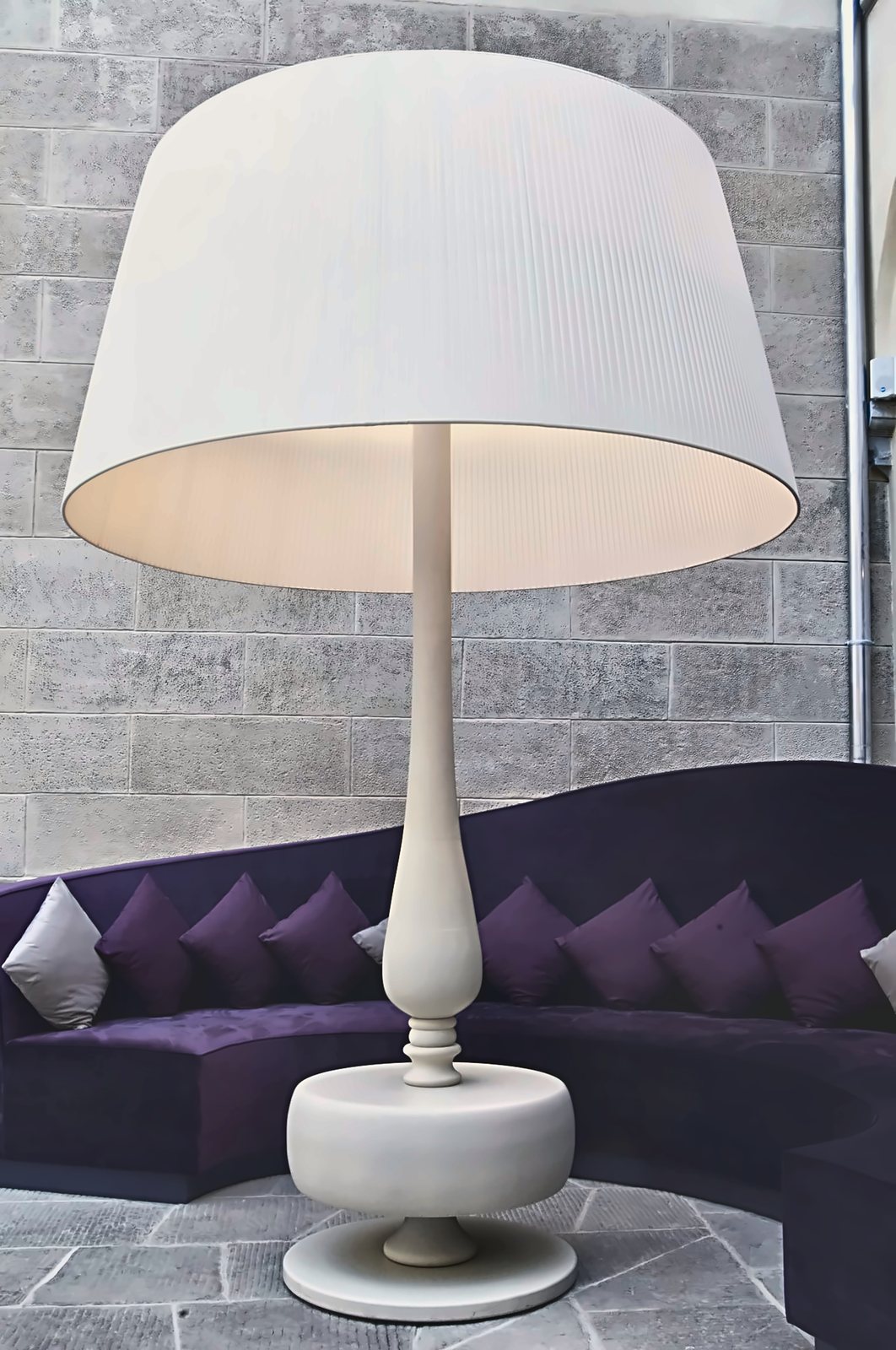
In the lobby there is a floor lamp that is deliberately out of scale: three metres tall, with a shade two metres across. It is not a big lamp — it is a lamp answering a room with the ceilings of a Renaissance villa.
The stem is entirely wood, turned as a baluster on a stacked disc base; the shade is wrapped in silk, with vertical ribbing you only read once the lamp is lit. At that diameter the wrapping is not bought: it is done on the frame, one turn at a time.
The point of a floor lamp like this is that it lowers the ceiling without touching it: the cone of light stops at head height, and the vault stays where it is.
In the restaurant the light stands on the floor, because vaults do not get cut
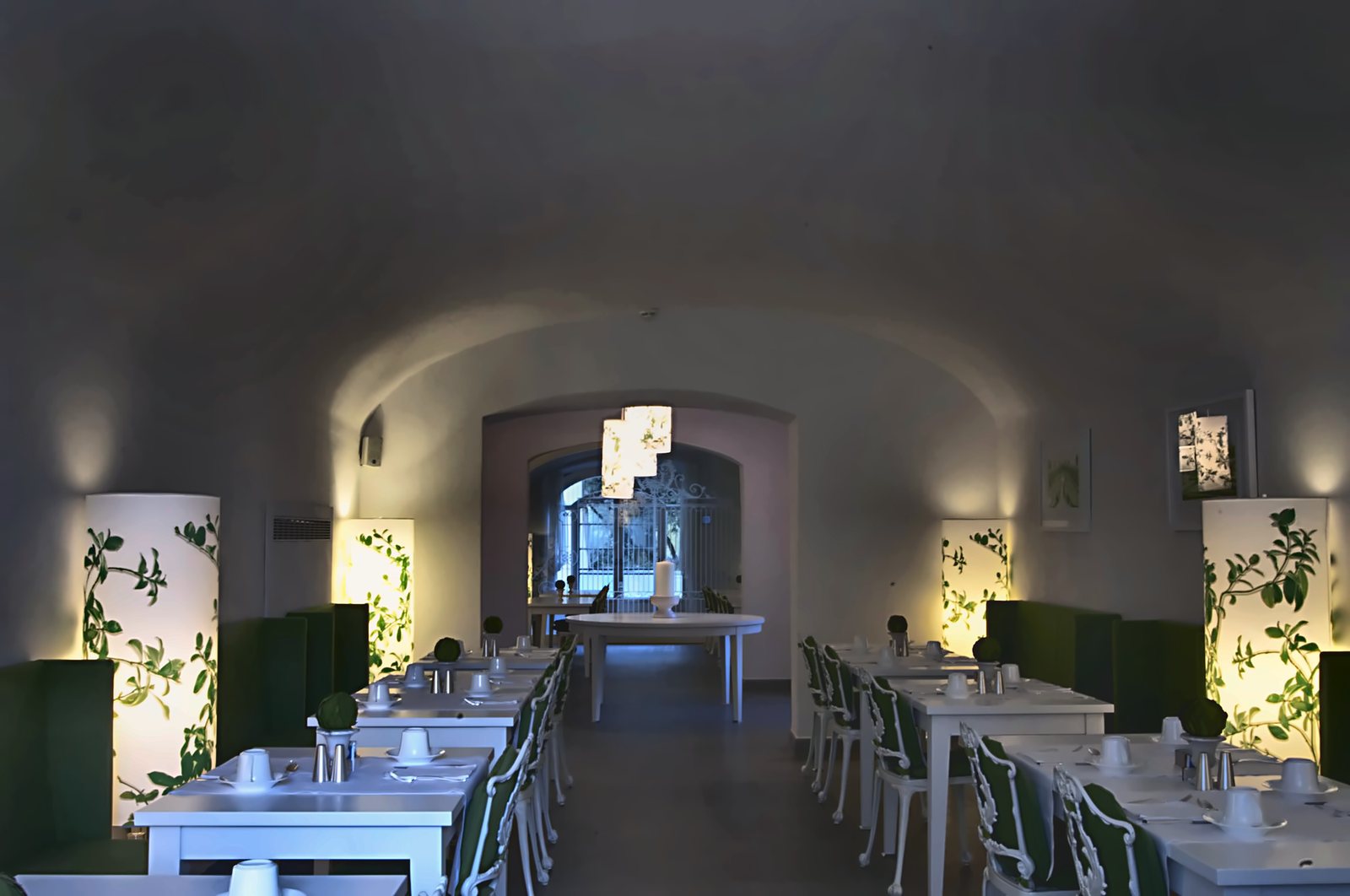
The restaurant sits under cross vaults: a chandelier hung in the middle would cut the vault in two, and in a room like that the vault is the thing people look at.
The answer is light columns on the floor: fabric cylinders with a botanical print, standing between the tables and against the walls. They throw light up and sideways, leave the centre of the room clear, and by day they are furniture.
The same family comes back in three sizes: the floor column, the cylinder on a sphere base, and the pendant in groups of three. One print, three different heights.
Eight rooms, and always the same glass
Photographs of the finished villa, November 2017.
Five millimetres at a time
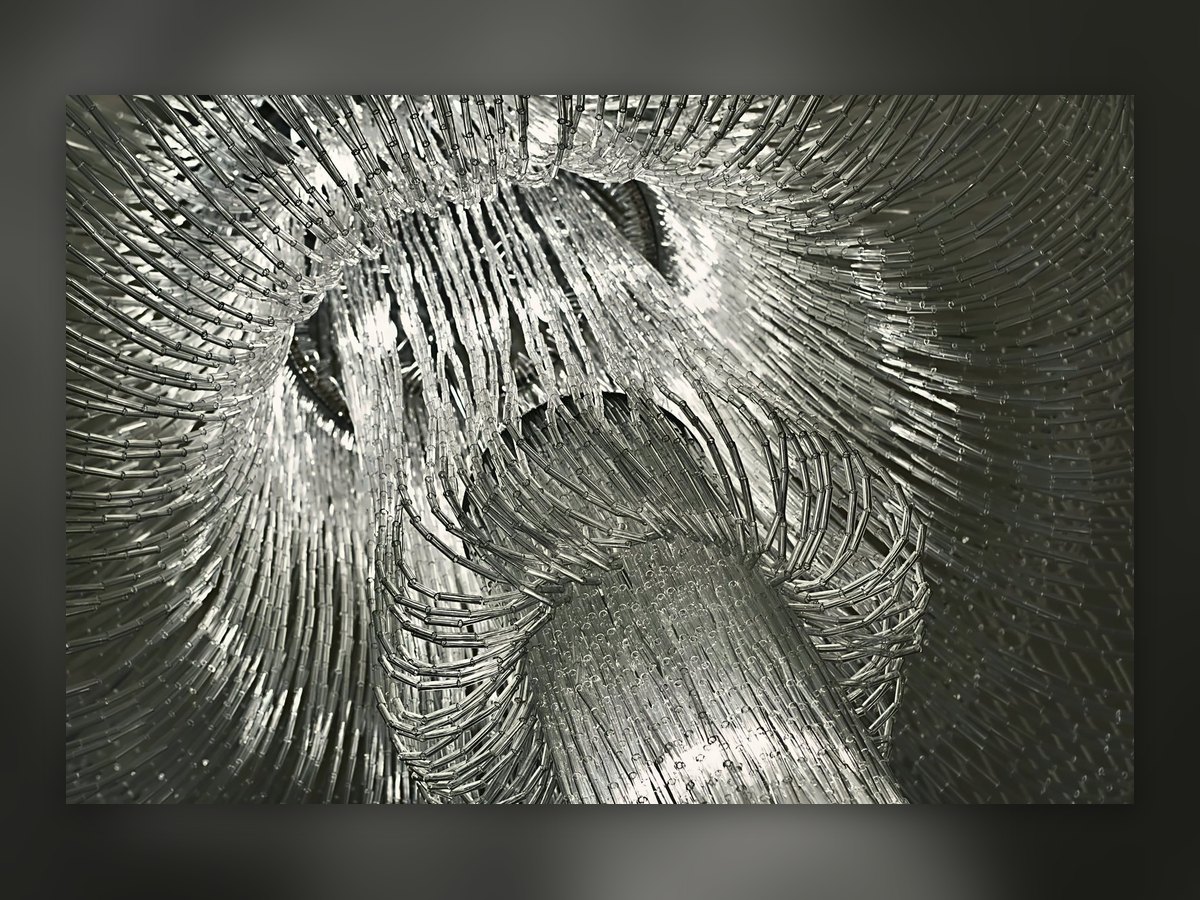
Each cane is five millimetres thick and forty tall. Up close the glass is not smooth: the ribbing is what breaks the reflection and multiplies it.
Two, because the room is long
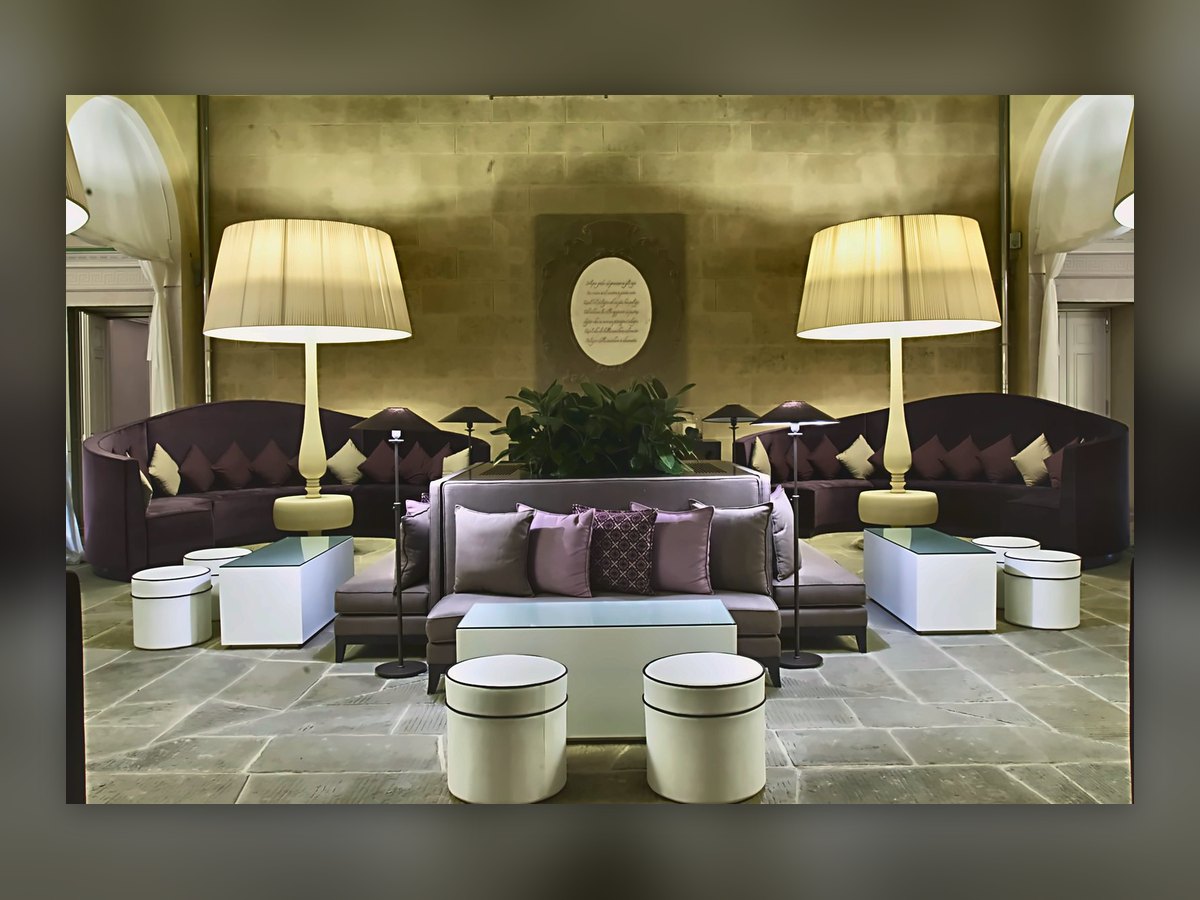
In the lounge there are two floor lamps, one at each end of the sofas: a single one would have lit half the room and left the other half wondering why.
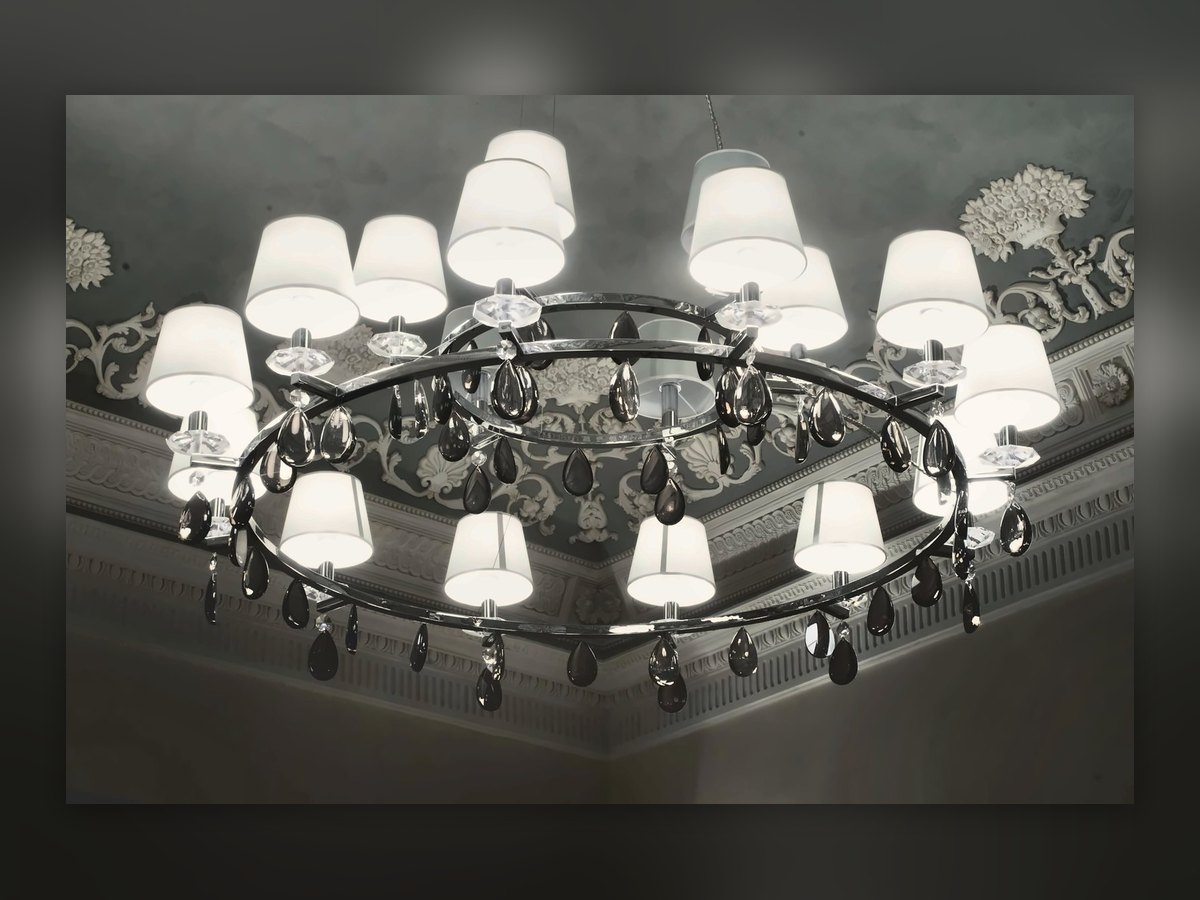
The ring under the decorated ceiling
Sixteen shades on a ring and crystal drops hanging: the light stays at ring height, and the decorated ceiling stays clean above it.
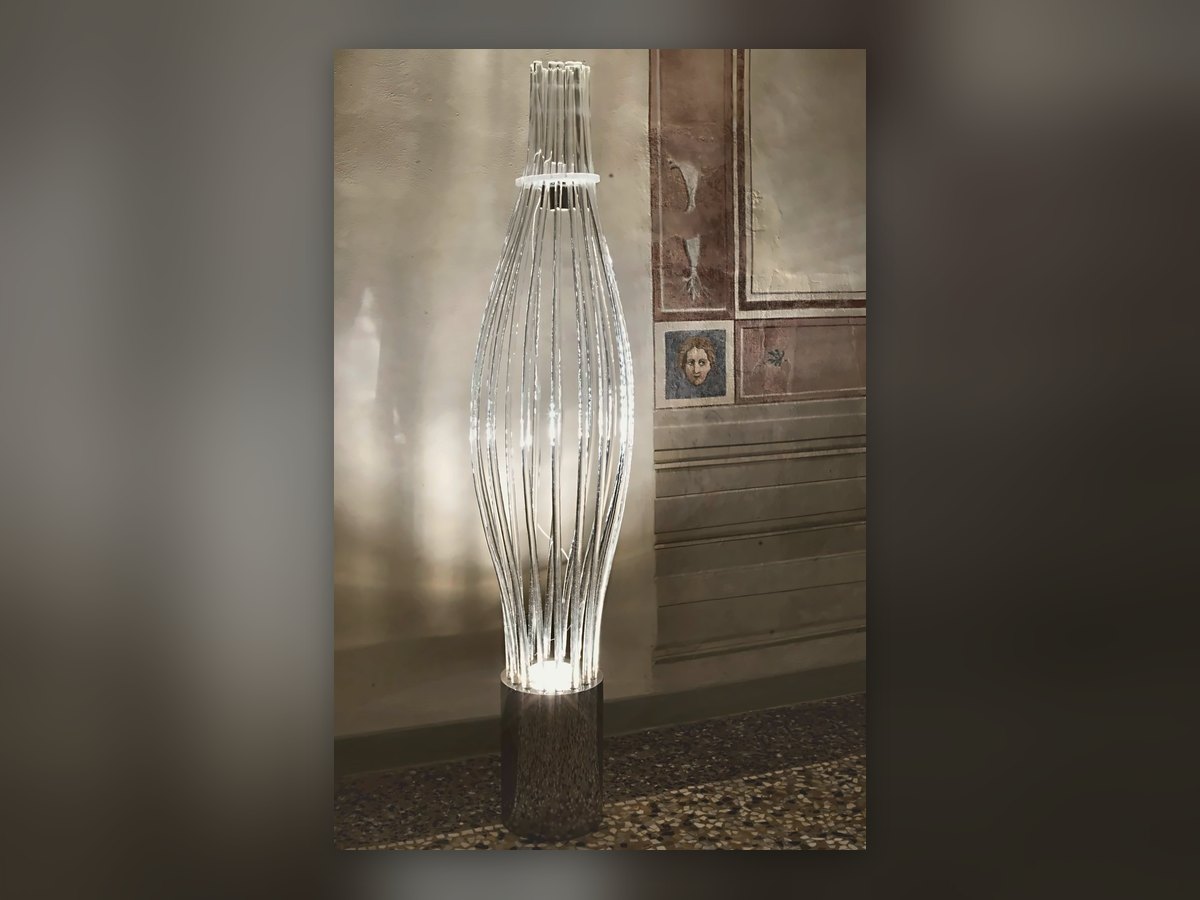
The same cane, standing up
The chandelier's canes come back vertical in a vase-shaped floor lamp: the same piece, assembled to stand instead of hang.
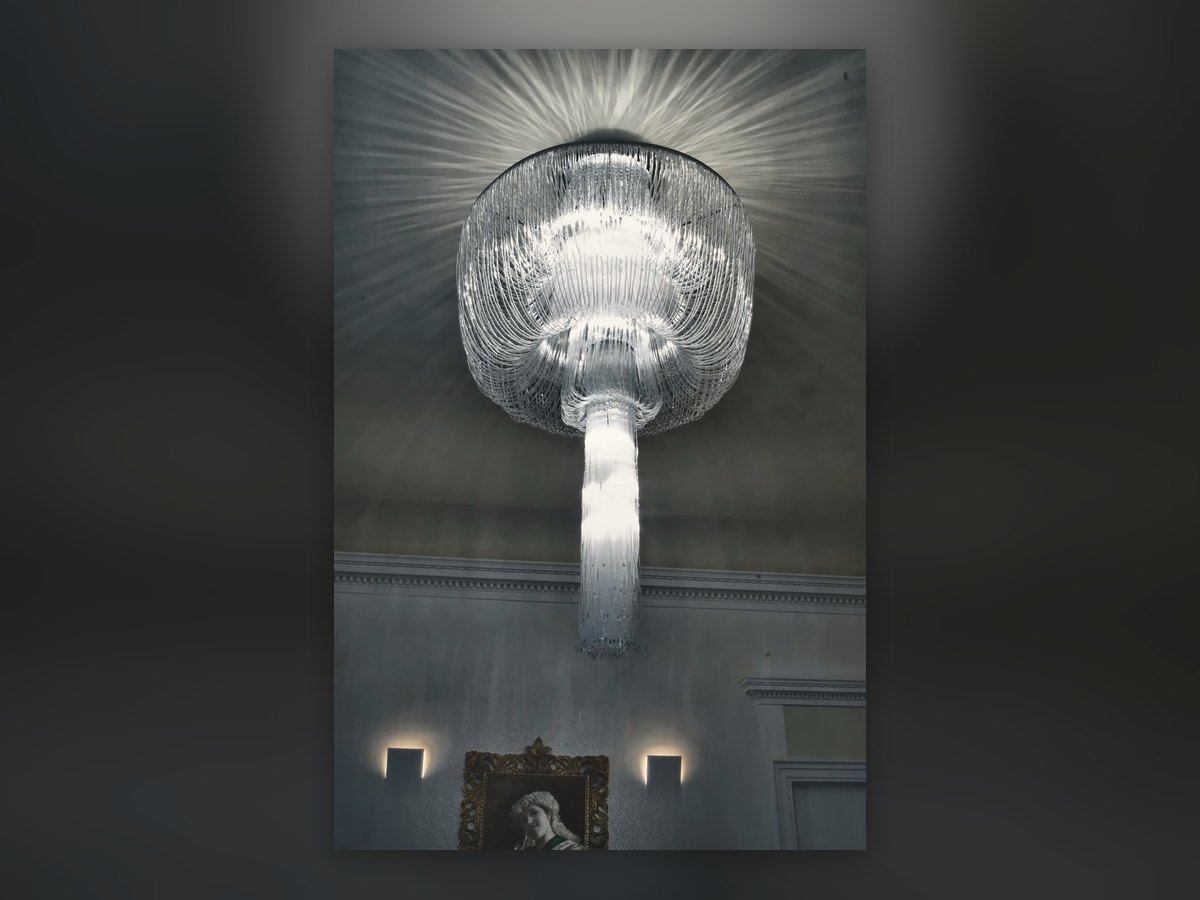
When the ceiling is low
Where there is no height for a tiered chandelier, the same cane closes into a dome and stays tight to the ceiling.
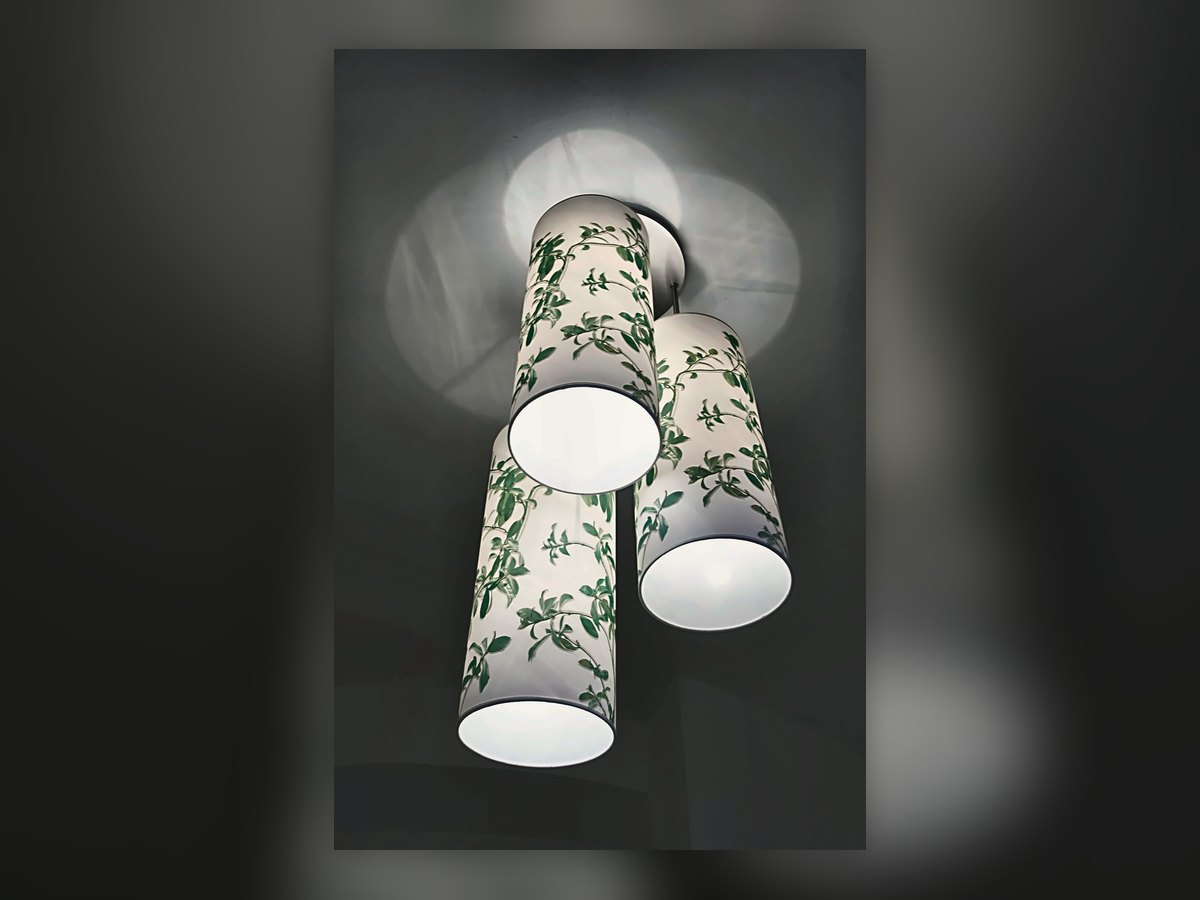
Three heights instead of one
The cylinders drop to different heights: over a round table three levels make volume, three cylinders at one height make a line.
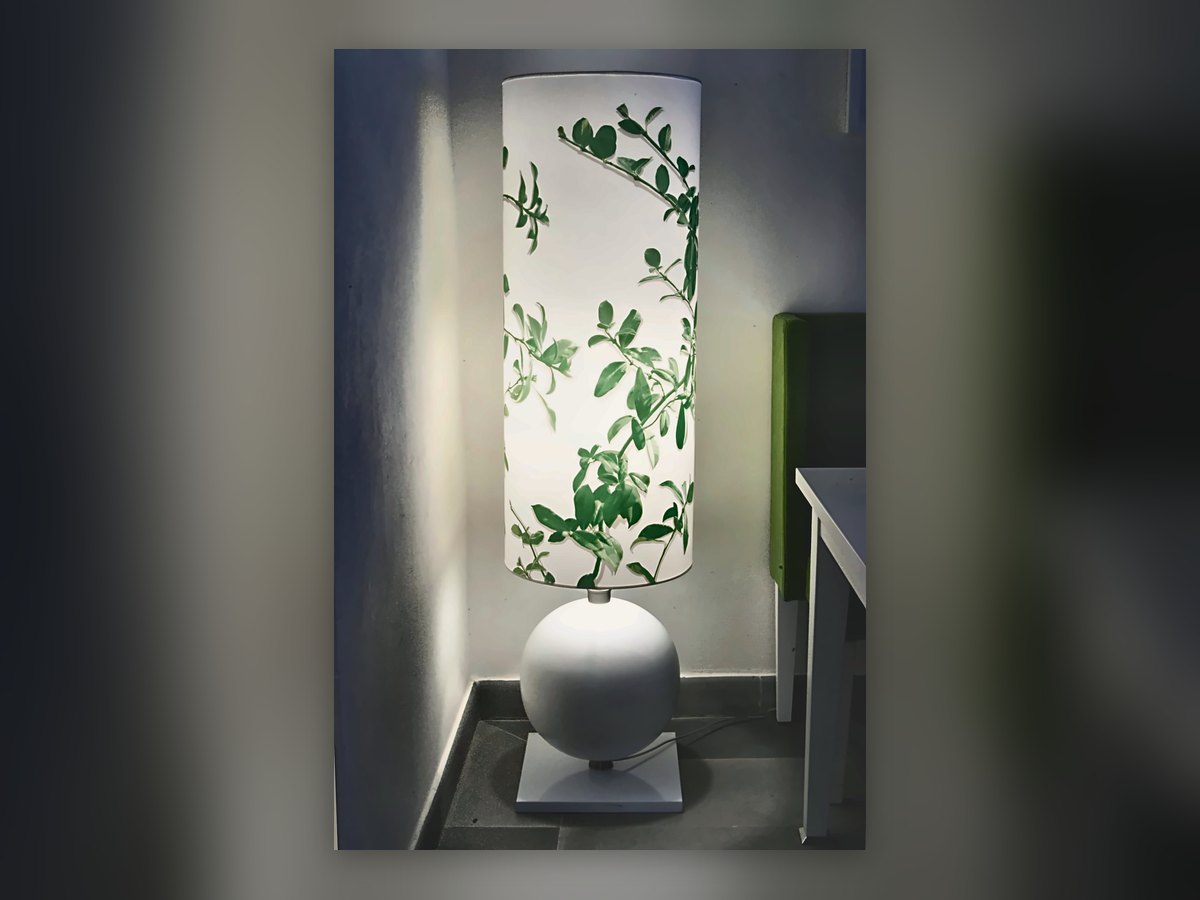
The print that continues on the floor
The restaurant's botanical print returns on a sphere-based floor lamp: the room holds together with a drawing, not a colour.
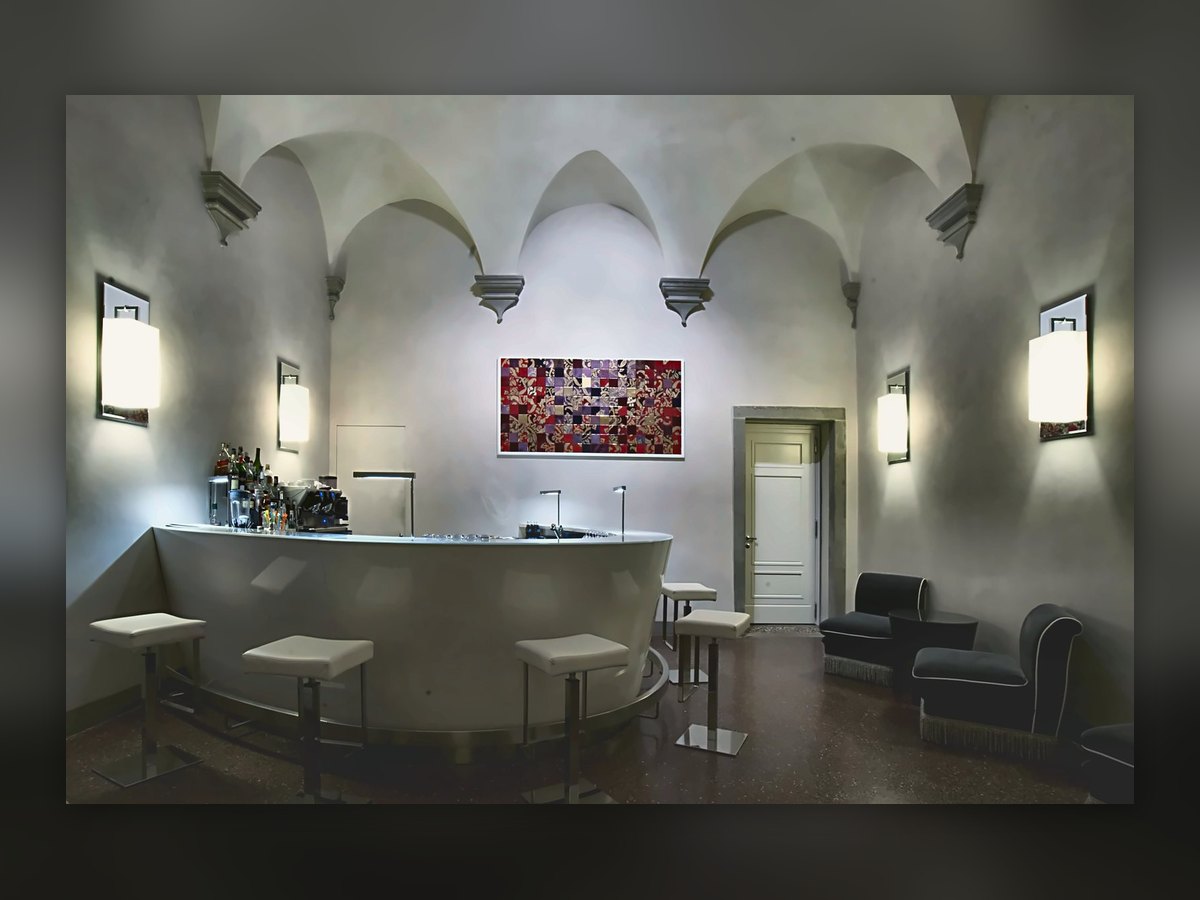
Square wall lights under the cross vaults
At the bar the light is on the walls: under a cross vault a suspended fitting always ends up in the wrong place relative to the ribs.
A project like this starts with a specification
Send us the drawings and the brief: the lighting design comes back to you, and if you then buy the fittings from us that calculation costs you nothing.